Google+

contact us

Use the form on the right to contact us.

Day or Night, we are here to serve you. Leave your plumbing problem to us.


Tinley Park, IL

(708)845-7922

Residential and Commercial plumbers and plumbing contractors available in Orland Park, Tinley Park, Oak Lawn, Palos Heights, Midlothian, Oak Forest, Homer Glen, Mokena, Frankfort, and the surrounding Chicago South Suburbs. Emergency plumbers.

copper water lines.jpg

Kevin Szabo Jr Plumbing Blog

Kevin Szabo Jr Plumbing is Tinley Park, Orland Park, Oak Forest, Midlothian, Orland Hill, Homer Glen, Mokena, Frankfort, Crestwood, Palos Heights, Oak Lawn, local plumber. Read our blog for advice, tips, a good laugh, and basic home improvement.

**We are moving our old blog to our new and improved website. Too see all our posts visit kevinszabojrplumbing.blogspot.com

How do you Fix the Issues with your Water Heater’s Pilot Light?

RH Business Marketing Solutions

The pilot light is one of the most crucial components of your gas water heater. After all, the appliance can’t provide you with hot water if this component faces an issue. However, apart from being the most crucial component, it’s also probably the most troublesome one. Gas water heater users might come across problems, primarily associated with the pilot lighter, quite often. 

Now, you’d want to fix the issue as soon as possible. And, for that, you might usually want to hire a plumber. However, there are specific ways through which you can fix the issues all by yourself. Here, we have discussed some common pilot light issues and simple ways to fix them. Also, you do not need to have any technical skills to apply these solutions.

How does the Pilot Light Work?

The pilot light provides the igniting flame for the gas that the appliance releases through the burner. Only after that, the heater starts heating the water. Also, the pilot light should always stay lit when you ignite it. Otherwise, it will fail to ignite the gas coming out of the burner in turn. As a result, you won’t get any hot water while using the heater. 

Now, most of the issues you face with the pilot light are related to keeping it lit.  Other than that, it might sometimes fail to provide a properly sized flame to the gas. If there is an issue with its placement, then fix that first. You can simply reach out to Handyman Dubai for a quick and reliable solution. 

What to do when the Pilot Light’s Flame is too Small?

A small flame indicates that the pilot light isn’t receiving enough gas pressure. In that case, it would affect the functioning of your water heater. So, you must not ignore this issue and apply a solution for it. 

Now, this issue is mainly caused due to a clogged pilot light orifice. In that case, you can fix the issue by cleaning it. However, it’s more sensible to contact a certified professional if there are any other causes. 

Cleaning the pilot light orifice

The pilot orifice regulates the amount of gas released through the valve. So, you must clean it to improve the gas pressure. And, for that, you must stop the gas supply using the shut-off valve. 

Remove the orifice

You can’t clean the orifice as long as it’s attached to the appliance. So, you must detach it before proceeding with this task. And, for that, you must remove all the nuts that hold the orifice to the water heater. Based on the model you’re using, this might take a while. Moreover, you’d also have to detach the pilot tube and the thermocouple attached to the orifice. Once you’re done, you can simply proceed with the cleaning. 

How to clean the pilot orifice?

A can of compressed air would be one of the best tools for clearing out any dirt and debris. Apart from that, you should use sandpaper to clean its tip. You can also find a water heart cleaning brush available in the market for this task. Make sure to clean the orifice properly so that you don’t face this issue again anytime soon. Once you’re done, you must re-attach the components to the heater with the utmost care. 

Pilot Flame won’t Light or Keeps Going Out: Causes and Fixes

Many other users often report a failure to light the pilot flame. Apart from that, you might sometimes fail to light the pilot flame in the first place. Now, you must consider the following common causes behind both these issues: 

Dirty air vents

As you know, you need oxygen to light up the pilot flame or keep it lit. So, you must make sure that your appliance receives that in a proper quantity. Now, the air vents are the only means by which your water heater intakes oxygen. It might often get clogged by dirt and debris. 

In that case, the appliance may fail to light up the pilot flame. The air vents are located at the exterior of the appliance. So, you can clean them up quite easily. Also, make sure to do that regularly to avoid this issue further. 

Kinked flex tube

The kink tube is yet another exterior component you must examine for pilot light problems. As it happens, this tube might often get kinked to cause interruptions in the gas flow. In such cases, the pilot flame might keep going out or simply fail to light. 

So, you must straighten this crucial tube to fix the issue. It should work in case there aren’t any other problems with your water heater. 

Clogged pilot tube

In case, the previously mentioned fixes didn’t work, you must turn your attention to the pilot tube. This component supplies gas to the pilot light through the orifice. Sometimes, especially in old water heaters, this tube might get clogged. In that case, you simply need to clear it to fix the gas supply to the pilot light. 

So, detach the pilot tube from the heater and examine it for any blockages. You can simply use a thin wire or a needle to clear it effectively. Then, you must re-attach it to the appliance and try lighting the pilot flame. 

The sensor has bent away from the pilot flame

Apart from other parts, you must also take a look at the sensor. Do you find it bent away from the pilot light? If yes, then you’ve found the cause behind the problem. The sensor’s end should always touch the pilot flame. So, you can easily fix the issue by bending it to that position all by yourself. But, make sure to shut down the appliance before you do that. 

Dirty thermocouple

The thermocouple plays an important role in regulating the gas supply. It signals the appliance about whether the pilot flame is burning or is out. Depending on that, the heater supplies gas to the pilot light. Now, like other components, the thermocouple can often get dirt and debris on it as well. In such cases, it can mistake a lit pilot light as unlit and vice versa. 

As a result, it sends the wrong signal to the appliance. Now, if you’re wondering what should be your next step, then you simply need to clean the thermocouple to resolve this issue. 

Damaged thermocouple

Does the pilot light face issues even after you try the above-mentioned fixes? In that case, your water heater probably has a damaged thermocouple. So, you must make sure whether that’s the case. Test it with a multimeter and check whether it generates at least 20 MV voltage. 

What if it doesn’t supply the specified amount of voltage? In that case, you must replace the thermocouple. You can simply use a wrench to detach it from the water heater. Then, carefully attach the new thermocouple in its place. Also, make sure to turn the gas supply off before you proceed. 

What if these Solutions don’t Work?

In some cases, the problem might also lie with the flex tube. So, you must examine this component as well. Moreover, pilot light issues are also sometimes caused due to a broken main control valve. In that case, many service providers might offer you repairs for it. But, it’s better to get a new water heater in such situations.

Also Recommended:Plumbing Services in Dubai – Where to Book From?

Guest Contributor: Biler Charlie

Fall Kitchen Decorations

RH Business Marketing Solutions

Fall is right around the corner, and there’s no better time of the year. Decorating for fall can be so much fun, but also overwhelming with the amount of ideas there are. Decorating your kitchen is surely going to make it more inviting and give it a splash of fall.
Adding a wooden dough bowl to your kitchen table is a perfect decorative piece that can be filled with a variety of things, the fillers are endless. There are a huge variety of distressed wooden dough bowls in all different shapes and sizes, you’ll definitely be able to find one you like.

You can incorporate things you might already have in your kitchen in aiding you to decorate. Maybe you have a garden and have white or orange colored flowers, or maybe you can buy some. A vase is a common household item, most people have at least one of those in their house! Take every opportunity you can to save money. Don’t forget to pick up the little mini pumpkins to add the pumpkin spice. This is small and doesn’t take up much space, yet super cute!

Do you have kitchen towels laying around in your kitchen? This is the perfect time to pick up embroidered towels with cute fall sayings on them! They are subtle but very cute. They are very inexpensive and can be used outside of fall as well.

Do your windows shine bright in the day time and sometimes you need a little shade? Pumpkin themed curtains are the perfect touch of fall in your kitchen! They’re not dark enough to block all light, but just enough for some privacy and shade, with a cute burnt orange border!

Want to DIY a project for fall to put in your kitchen? If you have extra rolling pins laying around, this is the thing for you! Painting mini rolling pins and adding cute little puns to them that relate to fall and thanksgiving is a cute addition to your fall themed kitchen. Adding filler around the rolling pins is surely going to make them pop even more!

If you have an over the oven hood range, your decorating possibilities are endless. You can throw pumpkins and garland up there like this picture, you can put a sign up there, you can practically do anything! Just be careful the stuff doesn’t hang down too long as it could potentially be a fire hazard.

Guest Contributor: Tiffany Powell

Benefits of Becoming a Plumber

RH Business Marketing Solutions

Are you thinking about what you want to do in life? Going to a trade school is a very good idea after high school or if you think you need a career change. There’s so many benefits about going into the trades, and we highly recommend the plumbing industry!

Inexpensive Education

You can go to a community college or a vocational school to train to be a plumber, therefore avoiding the burden of massive student loan debts, especially pertinent in light of the current $1.73 trillion in student loan debt. There are also numerous apprenticeships that would allow you to work and earn money while learning hands on at the same time.

You make a good living

Most plumbers live comfortably. The average salary for a plumber, based on the Bureau of Labor Statistics, is over $50,620 annually compared to the national median income of $36,200. ​

The more experience you have, certifications, and skill you have all play into your salary. 

Job Security

You will never lose your job due to a lack of need. People will always need a plumber, no matter the state of the economic environment.

You’ll never get bored

Each job site is a different scenario and a different way to fix things. You will never get tired of doing the same thing because no two jobs will be the exact same.

There's always opportunity to reach higher positions.

After an apprenticeships, if you stick with it, you can be successful. You will be licensed, can open your own business, the opportunity is endless.

Guest Contributor: Tiffany Powell

How to maintain healthy plumbing in your new home?

RH Business Marketing Solutions

One of the things you have to do after the relocation is to maintain healthy plumbing in your new home. You might pay attention in the first few months or even for a year. However, after some time, people tend to relax and forget to follow best practices. That's when your plumbing starts to have problems. Luckily, we are here to show you how to take care of your plumbing system and make it last longer.

Regularly check your sewer pipe

Sewer pipe leakage is one of the more dangerous plumbing problems. It is also a severe health hazard. If you notice any unusual smell or if your grass around the house turns into mud or has discolored green patches, you need to call the plumber as soon as possible.

Detect leaking pipes on time

It is also crucial to learn how to detect hidden leaks around the house. Even the tiniest leak can turn into a huge issue if not fixed immediately. It is best to take a visible inspection and ensure there are no damp spots on your walls. Also, check any changes in your water bill or water pressure. Additionally, inspect the water meter to see if you are spending more water than usual. You can also resort to some clever hacks like using food color to see if the water flows in the correct direction.

Monitor water pressure to diagnose potential leaking pipes is an excellent way to maintain healthy plumbing in your new home.

Monitor water pressure to diagnose potential leaking pipes is an excellent way to maintain healthy plumbing in your new home.

Install smart leaking detection system

A smart leaking system is a bit more expensive, but it does all the work for you. This is a good idea if you are moving into a new house and it will be one of the things that will make moving less stressful. Perhaps not in the most direct way, but you will feel relaxed during the relocation process, knowing that your plumbing is monitored by this system 24/7. The system will monitor even the slightest change in how your plumbing works and report it immediately.

Fix any problem as soon as it appears

Do not be lazy when it comes to fixing plumbing issues. If you notice something, repair it immediately, no matter how small the problem is. It is a good practice, and you will train yourself to fix any issues as soon as they appear. Doing this will prevent more significant problems, and you will save yourself from plenty of hassle in the future.

Do annual plumbing maintenance

You need to call a professional plumber at least once a year to inspect the entire plumbing in your house. This is an expense, but it is also a necessity. The best way to do this is to call a few days ahead to schedule a visit. That will give you plenty of time to clear out some space for the plumber and move stuff around the house to make the pipes easily accessible. This is especially important if you are doing a larger plumbing project. If you need to move your furniture or some appliances, let the guys from US Moving Experts handle it for you. Professional movers will move all of the stuff that's in the way of any potential repairs safely, keep it in a storage unit, and return it to your home after the maintenance and repairs are over.

Installing a smart water meter is an excellent way to detect any issues with your plumbing on time.

Installing a smart water meter is an excellent way to detect any issues with your plumbing on time.

Winterize plumbing on time

Do not forget to winterize your plumbing before the winter arrives. This is an efficient and helpful practice to follow. Frozen pipes are a common thing during winter, especially if you live in a house. If a frozen pipe breaks, it will create a mess.

Shut off all outside valves to prevent the pipes from freezing. Also, wrap exposed pipes with old blankets you don’t use anymore. It is also a good idea to try and defrost the pipes as soon as the weather allows you. These small steps will mean a lot in the long run.

Take care of your garbage disposal

When it comes to plumbing inside your kitchen, people often make a mistake by throwing everything in the garbage disposal. Even though it can shred most of the things you throw in, you may still accidentally damage it. Furthermore, you can cause clogs inside the pipes if you are not careful.

This also happens if people do not use drain covers in the sink or the shower. You will quickly clog your plumbing without even noticing. Apply these practices to increase the longevity of your plumbing and reduce the number of smaller issues over the year.

Do not use your toilet as a garbage bin

Even though the toilet can swallow everything, you should not use it as a garbage bin. If you use lower toilets, you won't even see the clog coming. Backed-up water will flow out of the toilet seat and cause a flood in your bathroom. Furthermore, that can also cause a bad sewer odor in your home.

When unclogging the sink, do not use chemicals

Even though chemicals are a great way to clear clogs in the sink, they can also damage pipes. It is better to use a snake or a plunger instead. You might get your hands dirty, but it’s easier to wash your hands than to damage the pipes by accident.

The most common issue with the plumbing is a leaking sink. Fix it as soon as it happens.

The most common issue with the plumbing is a leaking sink. Fix it as soon as it happens.

Another thing to avoid doing is to pour cooking oil or grease inside the sink. It is yet another way to destroy your pipes from the inside.

That’s how to maintain healthy plumbing in your new home

Hopefully, now you understand how to maintain healthy plumbing in your new home. It takes some energy and effort to be on the constant lookout, but it pays off in the long run. The more you take care of your plumbing system, the longer it will serve you in your new home!

Guest Contributor: Sophia Perry

6 Important Roof Care and Maintenance Tips for Landlords and Property Managers

RH Business Marketing Solutions

Roofs are probably some of the biggest investments in the field of commercial properties. This shouldn't be that big of a surprise since their sheer size and scope make the first line of defense against all elements and lend tremendous structural protection to a building.

Still, this unique position exposes a roof to a great deal of attrition, and if owners and landlords don't invest enough time into maintenance, they can face very substantial repair costs. Let us take a look then at a couple of tips that should help you to avoid these costs and keep the roof of your rental property in top-tier shape.

Make sure the roof is draining properly

Clogged draining systems are one of the major causes of expensive roof repairs. Numerous rental properties are surrounded by trees and similar greenery that raise the price of the said property. The problem with them is that debris can easily build up and prevent drainage from performing its duty which can cause anything from leaks to serious structural damage if the problem persists. So, as step one, be sure to regularly inspect and clean all the gutters, pipes, and skylights that may prevent water from effectively draining from the roof.

Perform regular roof inspections

As every landlord knows, dealing with rental property maintenance in a fast and efficient manner. But, in order to be able to do so, you need to identify the problem as early as possible. That is why you should perform thorough roof inspections at least once or twice per year to make sure everything is safe, preferably during spring and fall before the extreme weather conditions kick in. But, if you want to be 100% sure, you might want to take a closer look at the roof after every serious storm. Other things you want to pay attention to are pests like birds, rats, termites, squirrels.

Be thorough and apply all safety measures

This is especially important if you are running multistory commercial buildings where sloppy work can cause severe subsequent costs and workers are in constant threat of injury. These problems can be easily avoided if you hire the experienced labor to assess the situation and do the remodeling works. Also, be sure that everyone is safe while they are on the task. Renting professional construction equipment and hiring someone to perform anchor point installation will ensure that all construction activities run smooth, fast, and without any life-threatening obstacles.

Take care of landscaping

As we mentioned in one of the previous passages, we mentioned that trees, shrubs, and greenery could cause extensive damage to the roof. This is the reason why you should take some time to arrange the yard around the property in a way to prevent these sorts of problems. Therefore, make sure that all loose branches are trimmed on time, bushes pruned properly, and all these trees and plants are at a safe distance from the building. If possible, trees around the yard should not be taller than the highest point of the roof since they can prove to be the most hazardous during a heavy storm.

Understand the impact of the local climate

Different climates have a different impact on roof construction and, as a result, cause a whole different set of problems. For instance, houses that are built-in colder climates are much more susceptible to snow and ice, so you need to make efforts to prepare a roofing system for the winter. On the other hand, warmer climates, extreme temperatures, and harsh sun can cause shingles to crack and sealants to fail prematurely. Windy areas will require that you anchor the shingles with some stronger material.

Take into consideration the resident turnover

Roofs are the structures that see a lot of upgrades, refits, and similar interventions that are closely related to the resident turnover. We are talking about satellite dish antennas, HVAC systems, ADSL infrastructure that usually goes through the attic, as well as smaller interior design projects that nevertheless require the penetration of the roof construction. No matter how insignificant these interventions may seem, they can severely compromise the integrity of the roof construction, so you should ask tenants to perform them under supervision and inspect the building at each turnover.

In conclusion

These few tips are far from a complete story, but they should give you some general idea about the ways you should take care of the roofs of your rental properties and avoid major repairs in the future. Roof systems are, by far, one of the most important parts of any building, regardless of whether we are talking about weather protection or structural integrity. That is why you should put extra effort into keeping them in good shape, even if you need to make some upfront investments.

About the author: Mike Johnston is an experienced blogger and editor with a background in creative writing and digital media. He’s a regular contributor to numerous online publications where he writes primarily about real estate, construction, home improvement, and interior design.


Kitchen Remodeling Ideas and Tips

RH Business Marketing Solutions

The kitchen is probably one of the most used rooms in an average household. It’s the heart and soul of a place. Plenty of warm and delicious memories are made in our kitchens — weekend meal preps for those hectic weeks, bulk baking for those bake sales, preparing a meal for your family (or yourself), holidays that have come and gone with the anticipation of more holidays to come. It is a happy place and a room that you would want to reflect and radiate that happiness. 

And because of the constant use of heat and appliances, the constant shuffling to and fro when achieving culinary endeavors tends to wear on the surfaces of that happy room, or maybe you saw a model kitchen that you think would fit very well in your abode, you start to think of remodeling. Kitchen remodeling could be quite an endeavor. It can be tricky whether you are a tenant or a property owner. 

When you’re renting, you’ll need to consider the contract you agreed to and the limits of what you can do when you are remodeling. As an owner, you’ll need to consider which renovations add value to a rental property. These things, plus the space, budget, individual tastes, etc. are things that need to be taken into consideration when renovating your kitchen. 

Remodeling ideas and tips

1. Consider the space

You can’t exactly have a large, professional type kitchen with wide walkways and large storage spaces with a gigantic fridge if you live in a tiny studio apartment. You’ll need a kitchen that matches the size of the space available. You can still have the kitchen of your dreams as long as you use the space smartly. 

  • Use the ceiling. You can use strong storage rods attached to your ceiling to store your pots and pans. Or your cups if you prefer. Just don’t store sharp objects up there, that’s just asking for trouble. 

  • Glass doors. See-through glass gives the impression of a wider space. It’ll make your kitchen feel bigger than it is. 

  • Lighting is everything. A dark kitchen will feel cramped. A well lit one will feel bright and airy. 

  • Storage is important, too. Try having a pull-out pantry if you don’t have enough space for a full one. The pull-out will keep your essentials neatly and safely stored while keeping your kitchen clutter-free. 

  • If you plan to show off the part of your dishware, try to use wall-mounted shelves. This way, you can display different designs of tea sets or spice jars and daily dishes without taking up valuable counter space. Consider using open-faced cabinets. This way, you can still have plenty of storage space for your dishware while also allowing guests to see your beautiful designs. By considering these options, you can easily find ways to show off your dishware while still keeping your small kitchen designs functional and stylish.

    2. Let’s talk appliances

Okay, so you want state-of-the-art, ultra modern appliances in your kitchen. Keep in mind that appliances will age and what is modern now will soon be old news, easily replaced by newer models. And if you are one of those people who worry about the environment, you might be looking for ways to reduce carbon footprint in your home. Seeing as one of the top consumers of electricity in the home is your refrigerator, taking into account the type of appliances to get when you remodel is an important step to getting the kitchen you so desire. 

You need to ask yourself:

  • Does the appliance I want to buy fit with my needs? You don’t need a commercial grade stove with six burners if you’re only feeding yourself and the occasional guests. The same goes for the reverse, you can’t have a single burner if you’re cooking for a family of five and three of those are ravenous teenagers. 

  • Will it fit my kitchen? The answer to this question is very important and will dictate whether you actually buy the appliance or not. If it’s too big, don’t get it. 

  • Is this a good quality product? Read reviews before buying. You don’t want to buy something that looks good but is actually a hidden fire hazard. Do your research. It will help you save money in the long run. 

  • Can I afford it? Speaking of money, remodeling can be expensive depending on how large the changes are. Create a budget and stick to it. And take into account the electricity it will consume. The higher the electricity consumption, the higher your bill will be at the end of the month. 

  1. Stick to the layout

Every kitchen is fitted with pipes and gas lines and wires and outlets. The simplest way to renovate a kitchen is to do so while keeping to the original layout. Moving the pipes can extend your timeline and might cause you to overshoot your budget. Not to mention the possible problems that could arise from changing the location of your plumbing and wires. Sticking to the original layout will mean fewer debris for you to clean up afterwards. It will also mean fewer things to worry about during renovation. 

Conclusion

Kitchen renovations can be daunting, but they can also be fun. Whether you are doing it yourself or hiring renovators, keeping these three tips in mind will help you stick to your budget, create a good plan, and, at the end of it all, a kitchen you can be proud of.

Guest Contributor: Kat Sarmiento

Everything You Need to Know About Home Extensions Before You Start the Demolition

RH Business Marketing Solutions

Is your home getting a little too small for your growing family or small business? You can build up, go down into the ground or create something that extends out the back—no matter what you choose, adding an extension to your house can efficiently solve your space problems. However, where do you start with your home extension? Here are a few things you need to know about this building project so that it ends up providing great home improvement benefits.

Don’t start without permissions

In most cases, but definitely depending on the size, shape and scale of your project, you will need to apply for planning permissions when extending your home. For instance, in Australia, you need council approval and building certification. Every local council is different, so it’s best to work with a designer who is willing to push the bounders and get you the most for the permits you receive. You can find a lot of information on designs on your council website and see which styles are permitted to ensure your neighborhood is complimented by architecture and not destroyed by it.

Time it well

In general, it’s best to plan for a summer build. Firstly, the weather is more stable and you will get fewer storms. Secondly, if you’re planning to stay in your house while the extension is being built, you will have more opportunities to spend time outside and escape the mess. Thirdly, if you’re doing a kitchen addition/remodel, you can easily rely on preparing food outside when the weather is nice. Also, make sure you finish your project before Christmas, especially in the States. Most builders close down for weeks, and if you’re missing any materials, you won’t be able to get them until January.

Team up with experts.jpg

Team up with experts

No matter how big your extension is, an architect will give your project that designer look, thanks to their expertise and experience. In places like Australia, all homeowners rely on architects when it comes to any building aspect—feasibility studies, design, tendering, project management, etc. Another thing people do is hire companies specializing in home renovations in Australia and ask them to provide everything from the design phase to final looks. Since renovations and extensions require a different set of skills than building from scratch, it’s best to find a company that focuses on these tasks particularly.

You will need a budget

Even the smallest extensions can break your bank if you don’t budget well. In general, you need to set aside $1500-$2700 per square meter, plus an extra 10-20% for emergencies. You can also issue your designer drawings to a calculator and get a more accurate cost. Keep in mind that your budget doesn’t only include building costs, but also architect and consultant fees and permits as well. Be realistic with your budget and you will manage to make your dreams into a reality.

Make sure your addition boosts the value

If you decide to sell one day, you’ll be glad that your extension boosts the value of your home. Every extension needs to make economic sense and add value that’s greater than the costs of the extension. Check out properties in your location and see how much they are worth, but be aware of the ceiling value and adjust your building plans accordingly.

Don’t get preoccupied with the size

There’s more to your project than square meters. You also need to think about what your extension is adding to the house beside the size. Bigger is not always better, and you will often find many creative ways to boost the square footage or create an illusion of a bigger space without investing in large extensions. Through clever design, anything is possible.

Aim for continuity

Your extension should look like it’s a part of the original building. While you might want to experiment, it’s best to take into account the architectural integrity of the house, street and neighborhood, as well as your personal preferences. If you add a very contemporary extension to your old heritage home, it can really ruin the curb appeal of the entire street. Blending old with new is very important if you don’t want to end up living in an abomination.

Be creative

On the other hand, try to be creative. You can extend your house upwards (loft), outwards (addition) or downwards (basement), all of which can stand out in the best possible way and give your property a lot of character. You can add an interesting design element that will set your extension apart—a shape of the extension, a hidden glazing panel, etc. Residential architecture can be very interesting, so don’t be scared to push the boundaries together with your architect.

Building home extensions is stressful, especially if you don’t have any previous experience, but if you follow these tips before you start any demolition, you will pull through and end up with a dream house for your family.

Guest Contributor: Diana Smith

Signs Your Home May Have a Leaking Sewer Pipe

RH Business Marketing Solutions

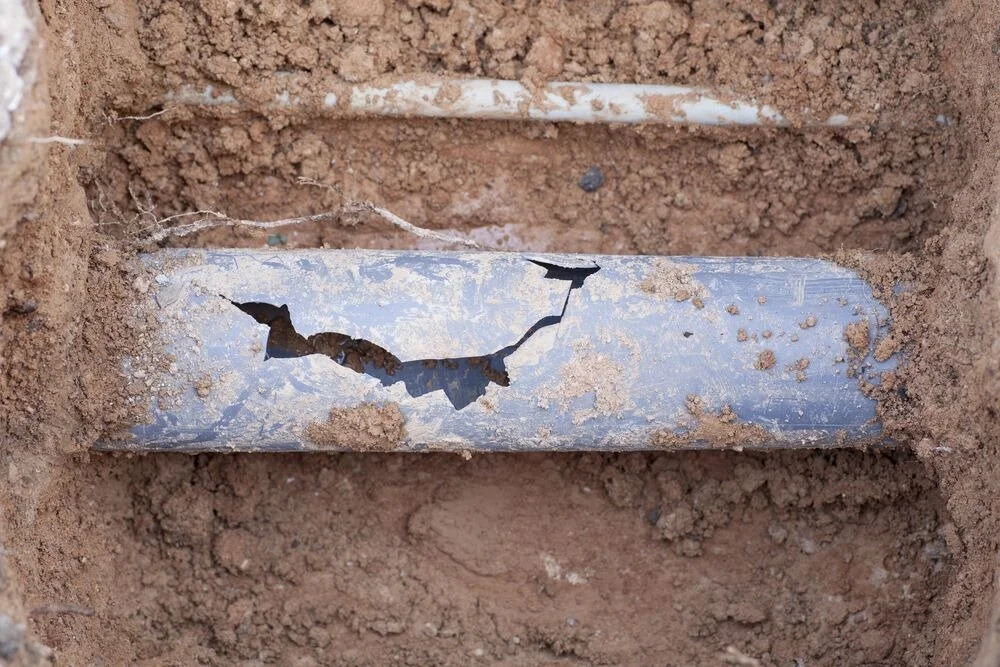
Of the many potential plumbing issues homeowners can face, sewer pipe trouble is considered one of the most costly. Often, homeowners won’t have a clue they have an undetected plumbing problem until they get their water bill. 

A massive spike in the water bill can be a clear indication of a sewer leak. If you suspect you have a sewer problem, it is recommended that you work with professionals and have a sewer camera inspection carried out as soon as possible.

Other telltale signs of sewer leaks you should look out for include:

Colored Water

Water from your faucet should be clear. If you have a sewer leak, water can turn yellow, brown, or green. However, colored water is not always an indication of an undetected sewage issue. Colored water can also be caused by rust in your plumbing system or a leaking pipe. Green water can also point to a corroding copper pipe. 

Sagging or Wet Floor

Another sign that can indicate a hidden water leak is a damp spot on your carpet. Water can seep upward when there are sewer leaks in the slab foundation of your home. Hidden leaks and concrete slab foundations often go hand-in-hand. 

Typically, pipes run through the concrete where they are kept hidden. If the leak is undetected for an extended period, you can end up with a damaged foundation.

Unexplained Odors

One of the very first signs that point to a sewer leak is unexplained odor. Most homeowners with a sewer leak would notice the smell of sulfur or eggs. The unpleasant smell is often attributed to gas that's released from an undetected plumbing leak. 

On the other hand, an eggy smell will not always indicate a plumbing problem or leak. At times, it can be traced to gas leaks from homes that use natural gas as a heating fuel. Either way, it is recommended that you have your pipes checked right away if you notice any unusual smell.

Slow Drain

If you notice your shower drains slowing down, the possible problem might be a hairball. Soap, hair, and other particles can also clog your drain and create sewer leaks. If the slow drain is in your kitchen, the problem can be caused by grease clogging the drain.

When every drain at home starts to move slowly, it can be an indication of a more severe issue like a sewer leak. If unsure, it would be best to seek help from professionals so the problem can be identified and fixed right away.

Old-Looking Pipes

Undoubtedly, visual inspection is one of the quickest and easiest ways to spot a possible sewer problem. Ideally, you should check for possible problems at least twice a year—before turning on the air conditioning and as soon as the temperatures drop.

Coupled with a frozen pipe, a sewer leak can turn into a plumbing disaster. Check the hidden area under your drain and look for possible joint leaks in your sewer system. Discoloration can also point to a possible leak. 

Water Pressure Drops Off

Contrary to popular belief, if you notice a low water pressure when running the dishwasher, taking a shower, or doing the laundry, it's not always a sign of an undetected plumbing problem. It is possible that your municipal water supply might be the culprit. 

If your water takes some time to drain and water pressure at every tap is low, there's a huge possibility you have a sewer leak. In some cases, a hidden mainline puncture might not leak into your home. Instead, it can flood your neighbor's property and keeps the problem hidden much longer.

Excess Water Pooling Outside

After a rain shower, a puddle or two can form. If you notice a puddle when it has not rained, it can indicate a problem with the drain system or an undetected sewer leak. Also, if you notice a sudden elevation change, it can be a sign of another issue like a collapsed sewer pipe. 

Also, if you notice the pipes backing up or a small pool forming, even if it's not raining, you're likely dealing with a hidden leak. It is recommended that you have your pipes checked to find the source of the leak and have it fixed.

Discoloration on the Walls

While unfortunate to note, most sewer leaks can stay undetected for months causing water to slowly seep throughout your home. A slow drip can also stay hidden for long periods if concealed behind your ceiling or wall.

Colored spots and dark rings that appear on the walls are not only unsightly, they can also indicate a leak that's hidden under the surface. Another clear sign of a sewer leak is bubbling or peeling paint or wallpaper. 

Final Thoughts

Sewer leaks can be very costly if left undetected for a long time. That said, if you notice any of the telltale signs above, get in touch with a professional so any issues can be resolved right away before they cause more damage.

8 Fall Decor Curb Appeals

RH Business Marketing Solutions

We all know curb appeal is important, everyone strives to have a nice looking front lawn. What happens when Fall rolls around and it’s time to decorate? It’s absolutely possible to have a gorgeous fall set up that will more than likely boost your curb appeal! Having people stop and admire your work is definitely the goal. Here are some inspiration pictures that are sure to leave you with a gorgeous front lawn.

Simple, but cute! The welcome sign can be seen from the street, and fits in perfectly with the oranges of the leaves and pumpkins. The little tree is a nice touch too!

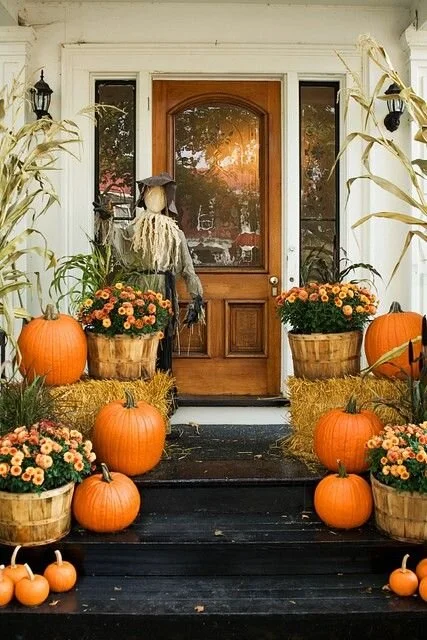
Are you looking for bigger decorations that are easily visible? Big plants and pumpkins are your go-to! Staggering them going up the stairs is sure to add dimension and variety, and looks gorgeous!

This is a cute way to display your address for guests to see! Make sure it’s placed tall enough to be visible from the street.

If you want to jump right into mixing fall with halloween, this is the perfect little corner set up! Add a variety of jack-o-lanterns, along with some different styled pumpkins to add uniqueness!

Do you have a long walk up to your doorstep? Throw in pumpkins to create a trail on the way up with different shades of fall-colored flowers!

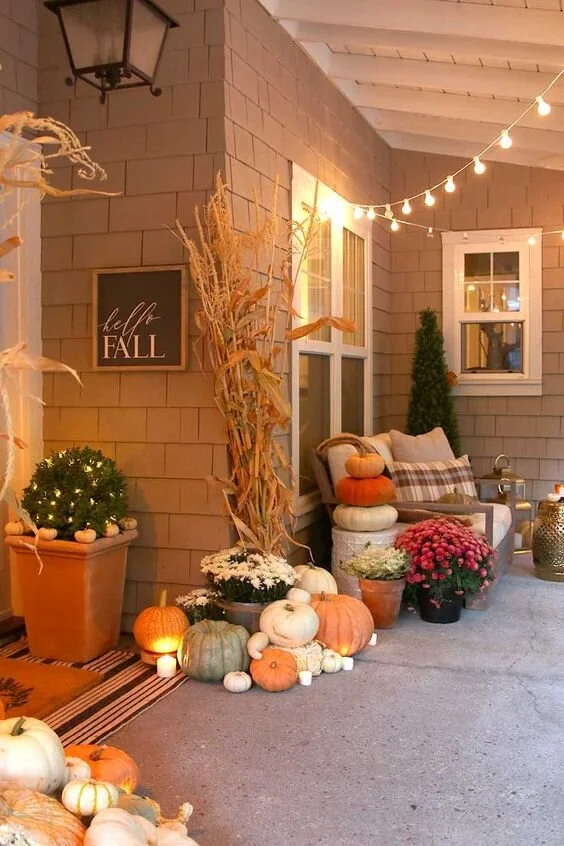
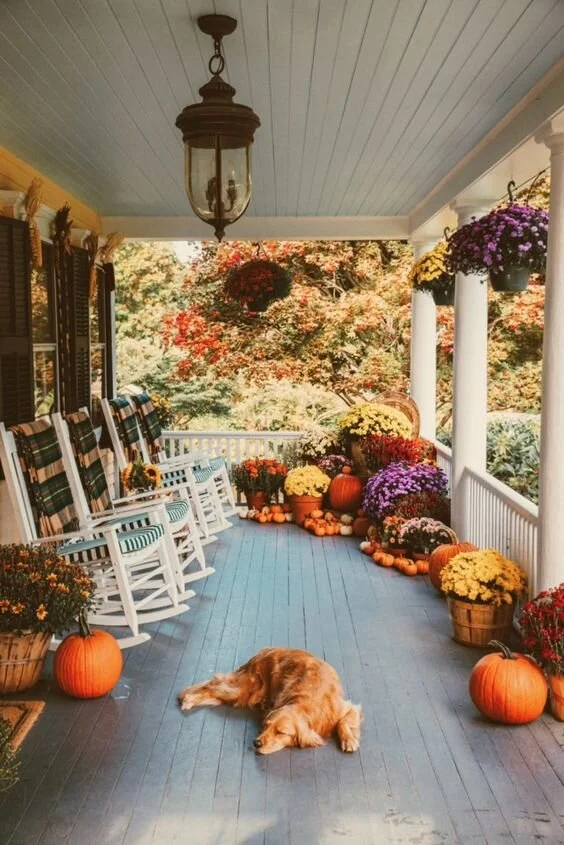
Do you have a little nook corner space on your front porch for sitting? This is the perfect opportunity to surround the seats with fall-related decorations! You can even throw in some fall throw pillows if that’s something you’re interested in. Nothing like getting cozy on your front porch in the September breeze with pumpkins surrounding you!

Another cute way to display your mailbox and address to visitors!

Guest Contributor: Tiffany Powell

Vintage Decor Ideas You Can Pull Off on a Budget

RH Business Marketing Solutions

The vintage decor style has had a big comeback which means that, if you’re a fan, you can now easily find a ton of old accessories, decorations and furniture pieces with that old but timeless and classy look. These items are typically expensive, but you can still find some on a budget or create something by yourself.

There’s no need to spend a fortune to redecorate your home in a vintage style. All you need is some time and imagination to add something special to every room.

With the budget-friendly vintage decorating ideas listed below, all you will need is some resourcefulness, creativity and time!

Search for Old Furniture

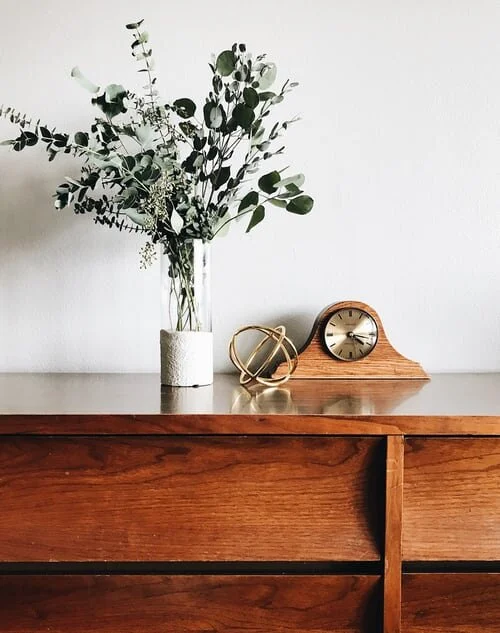
If you are going for vintage interior decor, start by choosing the right furniture. Vintage furniture is commonly older and a bit worn out, but the best thing is that it’s often quite cheap. For instance, you can find it at antique shops, yard sales, flea markets and auctions. Admittedly, you will need to be patient and do a lot of searching and digging before you find the perfect piece for your home. Shopping for vintage furniture can easily turn out to be one great and exciting adventure that may eventually reward you with a fabulous vintage décor piece!  

Repurpose Old Things

No vintage home decor is complete without some vintage accessories. The quickest and easiest way to get them is to look at what you already have and get creative! For example, you can create a feature wall and hang up your old plates.

Similarly, you can practically do the same with any vintage item you have as long as you find a cute way to display it. In this way, you give them a decorative purpose and an entirely new meaning.

Distress the Paint on Existing Furniture

Distressing the paint will turn even new furniture into a piece with a vintage vibe. It’s also an easy DIY project – just take some sandpaper and rub it over the furniture edges. Whether the paint job is old or new, the final look will be vintage-looking!

A word of wisdom before you start - this will only look good on furniture that can be conceived as older. It will never work on cheap, ultra-modern pieces. So, you should consider old tables, cabinets, desks, and other already-vintage-looking items. You can end up having stylish pieces with added gravity of age.

Antique and Collectibles with Vintage Touch

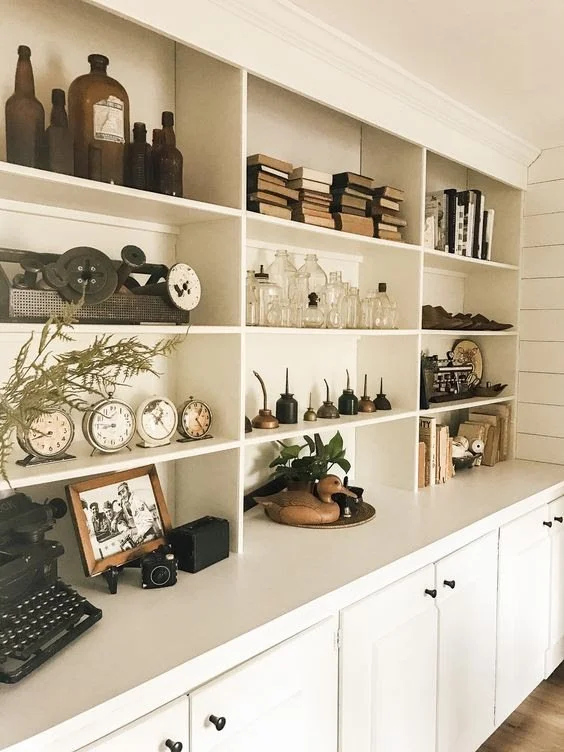
Vintage decor relies on the use of objects from previous centuries that are considered out-dated, but have been saved for their beauty or sentimental value.There are many different collectibles that can be used for decor in your house. They usually come from a specific decade, or even an earlier period of time when the object was popular like in the middle ages or medieval. Collectibles, such as antique glassware, miniature statues and firearm replicas such as flintlock pistols are all excellent choices for ornamentation. They can be used as vignettes, mounted on walls with frames, or placed in bookshelves.

Accessorize at Will

Accessories have always been an important part of decoration. Even more maybe, as these details have the power to infuse life in a boring interior. Tasteful accessories rank very high on the list of vintage decor ideas, primarily due to being cheap and easy to implement.

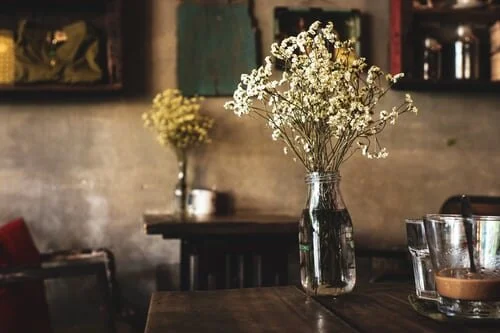
Keep your eyes open for vintage pottery, glassware, lace and even living plants such as gorgeous everlasting rose in a jar– that is certainly something that will be reminiscent of old times and vintage castles and it’ll last up to a year!

Hang Vintage Mirrors

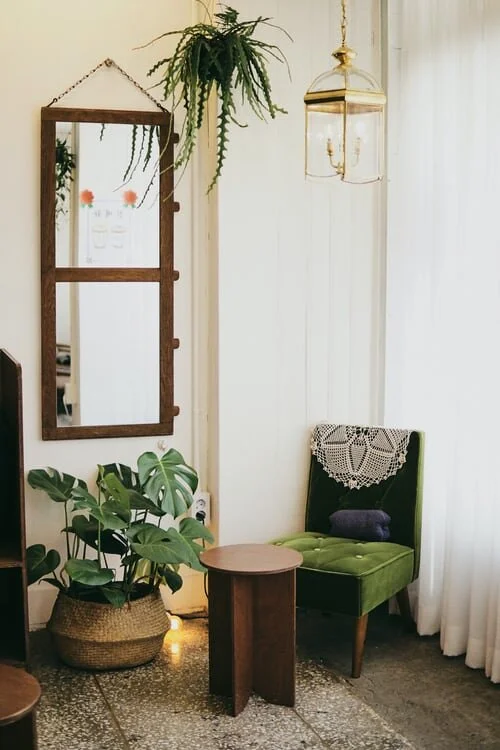
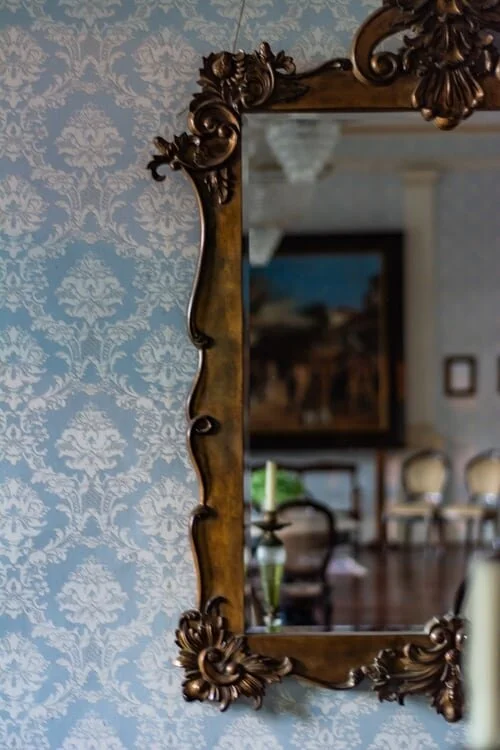
Mirrors are an excellent tool to use to make a room seem brighter and larger, but they also bring the charm and elegance of past times. Hanging up an oversized massive mirror with an elaborate golden frame will create a powerful effect recalling the grandeur of the Roaring ’20s.

For visual effect, you should try and find a mirror smoky with age and a frame that is faded. If you feel it needs a more aged look, don’t be afraid to paint it yourself and possibly distress it to give it the perfect aged-looking hue.

Create Shelves out of Old Suitcases

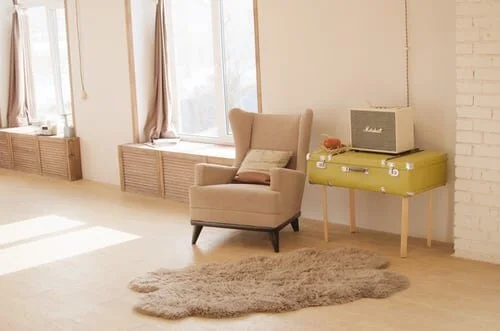
If you love DIY projects, this idea will be ideal – it involves turning old suitcases into shelves. It will require you to visit some more flea markets and antique shops, but once you have the amount you need, you can create unique shelving that will be visually effective and provide additional storage for your old books and vintage decorations.  

Add a Touch of Warmth with a Soft Rug

Warmth is what distinguishes a house from a home. One of the main vintage decor features is a warm and welcoming interior. The quickest and easiest way to do this is by using a soft rug with rich texture and colours. The great thing about rugs is that regardless of their size, they can be easily fitted in almost any sized room and they work well with antique wooden furniture pieces.

There are always lots of different ways to improve your home but if you are fond of vintage decors, the possibilities are practically endless. Hopefully, the vintage decor ideas listed here will inspire you to redesign your home on a budget and create a warm and inviting vintage feel.   

Guest Contributor: Diana Smith