Google+

contact us

Use the form on the right to contact us.

Day or Night, we are here to serve you. Leave your plumbing problem to us.


Tinley Park, IL

(708)845-7922

Residential and Commercial plumbers and plumbing contractors available in Orland Park, Tinley Park, Oak Lawn, Palos Heights, Midlothian, Oak Forest, Homer Glen, Mokena, Frankfort, and the surrounding Chicago South Suburbs. Emergency plumbers.

copper water lines.jpg

Kevin Szabo Jr Plumbing Blog

Kevin Szabo Jr Plumbing is Tinley Park, Orland Park, Oak Forest, Midlothian, Orland Hill, Homer Glen, Mokena, Frankfort, Crestwood, Palos Heights, Oak Lawn, local plumber. Read our blog for advice, tips, a good laugh, and basic home improvement.

**We are moving our old blog to our new and improved website. Too see all our posts visit kevinszabojrplumbing.blogspot.com

Understanding Water Fountains From a Plumber's Perspective: 9 Main Points

RH Business Marketing Solutions

Water fountains can improve your home’s appearance significantly. The best part about them is that they are very affordable, which makes them a great option for people who are looking for ways to improve their home’s design without spending a fortune.

However, before you can invest in a fountain, you need to take some time to learn about them. It is especially important to learn about them considering the rising costs of energy bills, since fountains use water. However, you shouldn’t worry about your fountain wasting water. This post will tell you about water fountains from a plumber’s perspective, so you know everything that’s worth knowing.

Types

Any plumber that’s worth working with will tell you about the different types of fountains before they tell you anything else so that they can find the style of fountain that’s right for you. A very popular style of fountain is the wall-mounted fountain. An outdoor wall fountain for the patio of your home will give you a comfortable place to sit beside and a great place to relax. You can also buy freestanding bird bath fountains, or even indoor fountains if that’s what you’re interested in.

Planning

When you are going to install a fountain, you need to plan meticulously. A fountain isn’t a small undertaking, since it will completely transform your home’s appearance. You need to ensure that you have thought through the type of fountain that you want, as well as the material that you want it made from. A plumber will be able to work with you to plan out the fountain that’s right for you. In addition to helping you to plan, they will also offer advice. Make sure that the plumber you are working with is experienced, so that you can trust their advice.

Materials

Something that you need to give a lot of consideration to is the material that your fountain is going to be made out of. More often than not, experts recommend investing in a fountain that is made out of concrete. The reason for this is that concrete tends to last a lot longer, not to mention that it’s a lot more durable and doesn’t show signs of wear as easily. A concrete fountain can last an entire lifetime and more if it’s properly cared for

Recycling

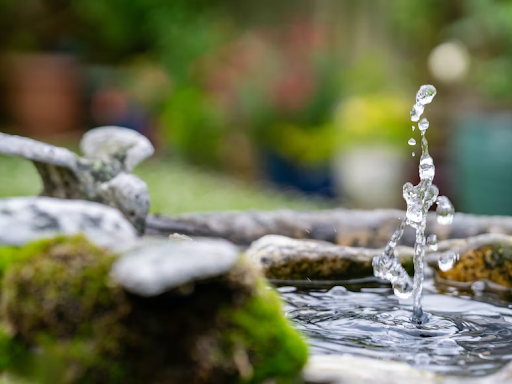
A lot of people are under the impression that fountains use a lot of water, but this isn’t true at all. Nearly all fountains sold today recycle water that’s held within their tanks. The water that’s held in the tank is typically collected from rain. However, during hot spells or intense summers, you may have to top up your fountain tank yourself. The reason for this is that the heat will cause the water in the fountain to evaporate. It’s also very likely that animals will come and drink from it in high heat, which will cause your fountain’s water reserve to dwindle.

Pump

When you are installing a fountain, you will have to install a pump. It’s nearly always best to let a trained plumber do this for you. If you do not have any experience with plumbing or setting up pumps, then you are probably going to do it wrong. Installing your fountain’s pump incorrectly will mean that water isn’t able to transfer from your fountain’s water tank into its basin. A big problem a lot of people have is a pump that isn’t forceful enough. A plumber will be able to help you to set up your pump so that it works properly.
Drainage

If you are going to be installing a very large fountain, then you also need to make sure that there’s a drainage pipe taking water away from your fountain. A plumber will be able to help you with this. If you have no plumbing experience, then there’s absolutely no way that you will be able to do this yourself. Trying to do this yourself will just result in you making a mistake or damaging your fountain. Drainage pipes can be very complicated to put down but are necessary. Again, they are only necessary for large fountains. Small ones don’t need them.

Overflow

Overflow is something else that you need to think about. Overflow occurs when too much water is in your fountain’s tank and basin, and water begins seeping over the surface. Overflow can be a real problem, especially if your fountain is placed on your patio, because it could lead to lots of water flooding out your patio. Overflow is a very big problem if one’s fountain is connected to the main water pipe since it can’t regulate itself. It can also happen when it is raining very intensely.

Moss

Moss is a big problem for a lot of outdoor fountains. Moss is an unavoidable part of fountain ownership. If you own one, then you need to regularly clear away and clean off any moss. If you allow moss to get out of control, then it can damage your fountain. Moss is very easily cleared away, however. If you do not clear it away when you first notice it, then it could get into the tank and then the pump, leading to blockages. Clearing it off as soon as you notice it will help you to prevent it from becoming much of a problem. You can hire a professional to come in and clean your fountain for you if it’s very large.

Maintenance

Lastly, you need to consider maintenance. There isn’t a single plumber in the world that won’t recommend regularly cleaning your fountain. If you do not clean and maintain your fountain, then it won’t last you a long time. Ideally, a fountain, especially if it’s concrete, should last you a lifetime. There’s no way that it can however if you don’t take care of it. Unfortunately, a lot of people don’t take care of their fountains, and this is why so many break down or deteriorate prematurely.

Fountains are a wonderful investment because they can improve your home’s appearance and also make your home a more relaxing place. However, you need to know the logistics of fountain ownership first, which this post has told you about. If you have any further concerns, reach out to a professional fountain distributor and a plumber.

How to Make Your Home Look New without Breaking the Bank

RH Business Marketing Solutions

No need to spend a fortune on making your home look new again. There are plenty of simple and inexpensive ways to give your home a fresh new look without spending a lot of money.

1. Give Your Walls A New Coat Of Paint

A fresh coat of paint is one of the easiest and most effective ways to give your home a new look. It can brighten a room, make it feel more spacious, and add a touch of personality.

When choosing a paint color, you must consider the overall tone you want to create. For example, light colors can make a room feel airy and open, while dark colors can add drama and depth. Once you've narrowed your choices, it's time to start painting!  

Just remember to prep the surfaces first by removing any old paint or wallpaper and sanding down any rough spots. With a little elbow grease and a few cans of paint, you'll be amazed at what a difference a new coat can make.

2. Switch up Your Furniture Arrangement

Sometimes, you need a fresh perspective to give your home a new look. If your furniture feels like a rut, try rearranging it! You might be surprised at how different a room can look when you switch up the layout.

Remember to take measurements before moving things around to know what will fit. And if you're feeling ambitious, you can always paint or refinish your existing furniture for an even bigger transformation.

3. Add Some Plants or Flowers

Adding a few plants or flowers can greatly impact your environment. Not only do they add color and life to any room, but they can also help to purify the air. If you're not much of a green thumb, opt for low-maintenance succulents or flowers that don't require a lot of watering.

4. Clean Everything

A thorough cleaning can make your home look and feel brand new. Start by decluttering each room and getting rid of any unwanted items. Then, give all surfaces a good wipe-down, including windows, floors, and countertops.

Once everything is clean, take some time to organize your belongings, so they're easy to find when you need them. This will help keep your space tidy and make it feel more like a haven than a dumping ground. Finally, add personal touches like family photos or artwork to make it feel your own.

Cleaning isn't just about making things look nicer; it's also an important way to protect your investment. By regularly cleaning your home, you'll be able to spot any potential problems early on and nip them in the bud. This will save you money in the long run and help your home maintain its value.

5. Invest in Energy-Efficient Upgrades

Making your home more energy-efficient is not only good for the environment—it's also good for your wallet. There are many easy and affordable ways to make your home more energy-efficient, from replacing light bulbs with LED bulbs to sealing up drafty windows and doors.

Investing in energy-efficient appliances can save money on your utility bills. These upgrades may cost a little bit upfront, but they'll quickly pay for themselves in the form of lower energy bills and a modern look for your home.

6. Exterior Remodeling

First impressions matter, so don't forget about your home's exterior when trying to give it a fresh new look. Siding helps to protect your home from the elements and can also give it a fresh new look. If your siding is starting to show its age, consider power washing it or replacing it altogether with reputable experts like James Hardie siding in Colorado.

Trim back any overgrown bushes and add colorful flowers to brighten your yard. And if you have a deck or patio, ensure it's in good repair and free of debris. These simple exterior upgrades will make your home look more inviting and increase its value.

Bottom Line

A good-looking home doesn't have to cost a fortune. It looks and feels great when it's clean and organized, and adding a few personal touches can make it feel like your own. Consider making budget-friendly upgrades to improve your home's curb appeal and increase its value.

Guest Contributor: Samantha Higgins

The Plumber’s Secret: 4 Plumbing Tips From the Experts

RH Business Marketing Solutions

Being a homeowner can be challenging. Owning a property means that you need to take care of it and address house-related problems once they manifest. Plumbing issues are one of them. General plumbing problems may include:

  • Dripping faucets that waste not only your water but also your money;

  • Leaky pipes that can damage your home’s structure;

  • Running toilets that can waste hundreds of gallons of water per day;

  • Clogged drains that result in waste build-up over time;

  • Low water pressure that can drastically impact water consumption; and the like. 

These nuances have to be addressed as soon as possible before they turn into something much worse. And for that, you may check out Fergusons Plumbing on Twitter or consult with any professional plumbing services in your area. These professional plumbers are equipped not only with the right skills and knowledge but also with highly advanced tools and gadgets to address every issue effectively.

But if you lack the budget to call and work with plumbing companies, you may consider learning a few tips and tricks from the experts to prevent or mitigate the issues yourself. Here are some of them:

1. Don’t Flush Items That Are Marked As ‘Flushable’

One of the most important rules in maintaining a healthy plumbing system is to avoid flushing items in your toilet. These include tissues, small toys (if you have kids at home), paper towels, disinfectant wipes, and other pieces of garbage. 

In addition, even those materials labeled ‘flushable’ shouldn’t be flushed in the john. What you can do best is to dispose of them properly in your garbage bags instead. Over time, these things will cause massive buildup and clog your toilet. So, always remind yourself not to make your toilet a second trash bin.

2. Avoid Using Extremely Harmful Chemicals 

Cleaning solutions are most effective when removing hard stains and killing microorganisms that linger on your surfaces. At some point, you want them to be as strong as possible to ensure the cleanliness of your home. But are they safe enough to use?

Strong cleaning solutions often contain harmful chemicals that may cause serious adverse reactions not only to your health but also to your plumbing system. Yes, you read that right. These harmful chemicals can damage your pipes, causing them to corrode over time. When that happens, your pipes will weaken, making them vulnerable to leaks you can’t easily notice. 

That said, here are some harmful cleaners you’d want to avoid:

  • Corrosive drain cleaners, such as toilet bowl and oven cleaners;

  • Cleaners containing a significant amount of bleach and ammonia; and the like. 

Instead of using these substances, you may try using natural cleaning agents. These are materials that don’t contain harmful and extremely toxic substances.

3. Follow The Sounds Carefully

Get your ears always on guard and carefully listen to the sound of running water. You have to check it out right away, as it can mean a couple of things such as:

  • Dripping faucets;

  • Leaky pipes;

  • Running toilets; and others. 

Dripping faucets are fixed by replacing the entire faucet or the damaged part. Leaky pipes may indicate a clog within (which can lead to bursting of pipes) or corrosion. Damaged pipes have to be replaced with new ones immediately. And when it comes to running toilets, you have to replace the valve that provides the seal inside the tank. 

If you need help addressing the issues mentioned, consider hiring a plumber right away. Doing all the work yourself may result in more serious issues. 

4. Get Rid Of Mineral Deposits

Unfiltered tap water often contains a few minerals, particularly calcium and magnesium. These minerals may form buildup over time and clog your drains, faucets, and showerheads. Ignoring these issues can cause detrimental problems, such as bursting pipes and leakages.

To prevent such cases, be sure to clean your faucets and showerheads every six months. Remove the parts and soak them in vinegar with baking soda. The sodium in the baking soda and the acid in the vinegar will help get rid of the mineral deposits stuck in your plumbing. 

It’s recommended that you steer clear of using harsher and stronger cleaning agents for they may contribute to faster pipe and plumbing deterioration over time. 

Final Words

Plumbing issues are a nuisance and ignoring them has detrimental effects on you and your family. Luckily, the expert tips enumerated above will be able to help. Yet don’t forget to ask professional plumbers for help whenever necessary, especially when the issue is too hard for you to handle all on your own.

Should You Buy or Build Your Home?

RH Business Marketing Solutions

When you are ready to settle down and make a big purchase on a home, there are two main options – buying or building. There are positive and negative aspects to both options, and it can be difficult to know which one is right for you. Buying a home may come with issues or details you cannot change, and on the other hand, building a home can take longer and be more expensive.

 There is no simple right or wrong answer when it comes to which way you’d like to purchase a home. When making this decision you need to consider what works best for you and your family now and in the future. Here we’ll go over the advantages and disadvantages of each option so you can have a better understanding of which option you want to choose.

Advantages of Buying a Home

There are many benefits to buying a home that has already been built.

Quicker to Move In

If time is of the essence for you, buying a home that already exists may be a better choice. Construction projects can take a lot of time, and there can always be unexpected delays that prolong the process. When you choose a home that is already built, you are able to move in much more quickly.

Urban Location

When you are looking for a home that is closer to a downtown area or in a city, building may not be an option. Many of these areas do not have plots of land available to be built on top of, so your only option, in this case, is to purchase something that is already built. If location is a huge dealbreaker for you, choosing an existing home in an urban area may be better.

Existing Landscaping

It can sometimes take years to grow full and beautiful landscaping after building a home. The construction of a home will take away any grass and shrubbery surrounding the house itself. If landscaping is something you do not want to wait for, buying a home could be a better option. With a built home comes existing landscaping that you won’t have to wait for, or worry about designing and paying for. Landscaping can make a huge difference in the appearance of your home so it is definitely worth considering.

Less Costly

For the most part, when you compare the price of building a home with the cost of purchasing one of a similar design and quality, buying is the cheaper option. You may have to do some renovations or put up with older details, but overall your budget can be much lower.  

If the home does require renovations, this can be a great way to personalize the home without having to build the whole thing from scratch.

Advantages of Building

Building a home is more time-consuming and expensive in general, but the pros may outweigh this for you.

Customization

One huge advantage to building your own home is the ability to customize it to your needs and desires. Older homes mean older floor plans and designs that may not be to your taste, but when you build a home you can make all of the decisions. Additionally, some aspects that may not be standard in most homes could be really important to you, and when you build you can ensure that your home has them.

If you’re not sure exactly how to go about certain customizations that you want, here are lots of custom home builderbusinesses that you can employ to help you make your dreams a reality.

Less Competition

When you fall in love with an existing home, you may not be the only one, which could mean trying to outbid another potential buyer. With a custom-built home, you won’t have to compete for a house you really love. Instead, you just have to worry about buying land to build on, and once you have that taken care of you will be sure to have the exact home you want without someone else wanting it to.

Less Maintenance and Problems

A brand new house is going to have a lot fewer problems from the start, and it will not require the same amount of maintenance that an older home does. Older homes also present the risk of asbestos, lead paint, and mold which can all be damaging to your health.  

An existing home has probably been lived in, and depending on how old it is could need renovations and more frequent maintenance. However, a new home will not need updates or renovations. For example, a new home can be built to be energy efficient, so you can save money in the long run without having to make any updates.

Disadvantages of Buying a Home

While buying an existing home has many advantages, it also has some disadvantages.

More Stressful

Buying a home can be incredibly stressful, and even with the help of a good real estate agent, you may have a difficult time finding a home with a style that is right for you. Many home buyers will have to compromise certain features and design preferences when buying a home because what is popular or in their taste today, was likely not when the home was built.

You can also find yourself in a bidding war over a home, and having your offers rejected can become discouraging.

Maintenance Issues

Depending on the age of your home you may have to deal with problems that require a lot of maintenance. Nothing lasts forever, and older homes tend to need renovations or replacements. This can be more than just hating the tile in a bathroom, often outdated appliances or structural aspects will need to be replaced for safety and efficiency reasons.

An older home is also at risk of having hazardous materials built into it because the standards were different when it was built.

Disadvantages of Building

While building a home gives you more freedom of choice, it also has its disadvantages.

More Expensive

Building a home can be an expensive project, and will likely cost more overall than purchasing one that is a bit older. Additionally, land loans can be more difficult to obtain because there is less collateral, and they will often have a higher down payment and higher interest rate than a  loan for a house. In addition to a land loan, you will also have to obtain a construction loan for the actual building process.

Building a house could come with unexpected costs as well if there are any unforeseen issues during the construction process.

More Time

Building a home will require you to wait out the entire construction process, which can take a long time and delay your move-in date. If you are looking to move in as soon as possible, building could be a less appealing option for you because of how long construction projects can take. There will also probably be delays, so a tight timeline would not be as feasible.

If you are going to build a home you will need to be prepared to make changes to your timeline and have somewhere to live until everything is complete.

More Effort

Even with the help of a builder, building a home requires a lot more of your participation. You will have an enormous amount of decisions to make and a majority of the time builders and project managers will need your approval before moving forward. Building a home is a much more hands-on undertaking than buying a home, and could end up being a stressful process on top of your other responsibilities.

Guest Contributor: Jenn Walker

Air purifiers or Air ionisers? Choosing the perfect Air security device for you.

RH Business Marketing Solutions

One of the most talked-about things after the pandemic has been Air security and Air safety and how we can minimize the harmful effects of outdoor as-well-as indoor air pollutants on our health.

According to the WHO guidelines, we should wear a mask to protect ourselves from outdoor pollution. But what about indoors? You cannot sit wearing a mask in your room.

The air inside is five times more harmful and hazardous than the air outside. Studies from the United States and Europe show that persons in industrialized nations spend more than 90 per cent of their time indoors. Infants, their mothers, the elderly and people suffering from chronic diseases make up the majority of this 90 per cent. And are exposed to harmful pollutants like VOCs, PM10 and PM 2.5.

To save our family and friends from the diseases caused by indoor air pollution such as lung cancer, Chronic Obstructive Pulmonary Disease(COPD), strokes and Chronic Respiratory disease, we need some kind of air security system in our homes to breathe cleaner air.

We have various kinds of air purifiers with different technologies available in the market. Among all the others, Ionisers and HEPA filters are the most booming air purifiers known today.

Let’s go through and compare both kinds of purifiers, one by one.

Air purifiers v/s Ionisers

Technology

Air purifiers and Ionisers both perform the same function. They cleanse the air, remove allergens and pollutants and are capable of eliminating pollutants as small as 0.3 to 0.1 microns. Then how are they different? Because of the technology they use.

Air purifiers

It consists of a fan and a filter or a series of filters. The fan sucks in the air and passes it through a combination of filters. These filters trap particles, letting clean air be pushed back into the room to circulate.

Usually, the air purifiers use the following two types of filters: -

●     Aluminium filters- These trap larger particles like dust, pet dander and hair.

●     HEPA filters- High-Efficiency Particulate Air (HEPA) filters are capable of capturing the smallest of the dust particles, moulds and spores.

The best working filters use a combination of both Aluminium and HEPA filters.

Ionisers

It uses the chemical properties of ions to remove the particles and microbes from the air. It creates negative ions using electricity and discharges them into the room then the negatively charged ions bind into the airborne particles like dust and smoke. As these particles become heavier, they eventually land on surfaces like floors and furniture and may even stick to the walls.

Pros

Air Purifiers

●     Air purifiers work for a wider range of particles. Aluminium filters trap large particles like dust and pollen. On the other hand, HEPA filters trap small particles like pet dander, bacteria and viruses.

●     HEPA filters are capable of removing small particles down to 0.3 microns.

●     Air purifiers do not have any harmful emissions.

●     Unlike Ionisers, all the contaminants and pollutants are sucked in through the fan. So, there is no need to clean the room again and again.

●     Some special kinds of filters are even capable of removing microbes.

●     It is best for people suffering from allergies and asthma.

Ionisers

●     Ionisers are perfectly capable of purifying small as well as large spaces. It works better than any air purifier in large areas.

●     It’s low maintenance and cost-effective.

●     No parts like filters need to be replaced.

●     It removes smaller particles such as tobacco smoke and smog, which measures between 0.01 to 0.1 microns.

●     Some studies show that negative ions can slow the growth of viruses and can kill bacteria, fungi and molds.

Cons

Air Purifiers

●     It requires regular maintenance. Pre-filters require cleaning every 30 days.

●     It is not pocket friendly as HEPA filters last up to a year after that it's recommended to change the filters.

●     It is noisy and may hinder your sleep.

●     Most air purifiers are incapable of removing smoke and odour.

Ionisers

●     It is not suitable for removing large particles like dust and pollen.

●     You may find your furniture a lot dirtier as the pollutants settle on surfaces.

●     Some of them emit Ozone which is extremely harmful to health.

●     Low effectiveness due to low airflow rates.

So having discussed both the Air purifiers and Air Ionisers, we have some points in our hand.

·       Both have their merits and demerits.

·       Both are not suitable for everyone.

·       Every house is different and so are its needs.

Let's be honest, People don’t care whether it's an Air purifier or an Ioniser, people need complete Air security and air safety.

So, after doing a lot of research and putting in a lot of hard work, we have brought you the best of both worlds.Tenshield

What is Tenshield?

Tenshield is an air security device (not to confuse it with an air purifier or Ioniser) brought to you by Freshcraft

What makes Tenshield different from an Air purifier or Air Ioniser?

How does it work?

It has a lot of similarities to that of an air ioniser. But it does not emit ozone which most ionizers do! Apart from releasing a large number of negative ions, which sticks to the tiniest of airborne particles, it ionises the incoming gasses and chF  G emically alters them making the air free from harmful gasses. It can kill or deactivate airborne microorganisms too.

Pros

●     It is good at removing pet dander, mold spores, bacteria and viruses from the air.

●     Unlike Air purifiers, it eliminates odour.

●     Unlike Ionisers, it is capable of removing bigger particles like dust and pollen.

●     Forget the noise, they offer ultra-silence.

●     It’s energy-efficient and low maintenance i.e. it is pocket friendly.

●     And my favourite one. Even after using the ionisation technology, it does not release Ozone.

Cons

●     It works while plugged in, No battery support.

●     No metallic objects can be placed near the device because of the electrostatic discharge.

But the merits clearly outweigh the demerits, and I haven’t mentioned all the advantages Tenshield has over any Air purifier or Ioniser.

 It is called an Absolute Air Security Device for a reason. It offers ultra Air safety to your home and family without releasing any harmful byproduct. It delivers what it promises.

If you are looking forward to investing in an Air security device, you should definitely go for Tenshield.

Guest Contributor: Arslan Hassan

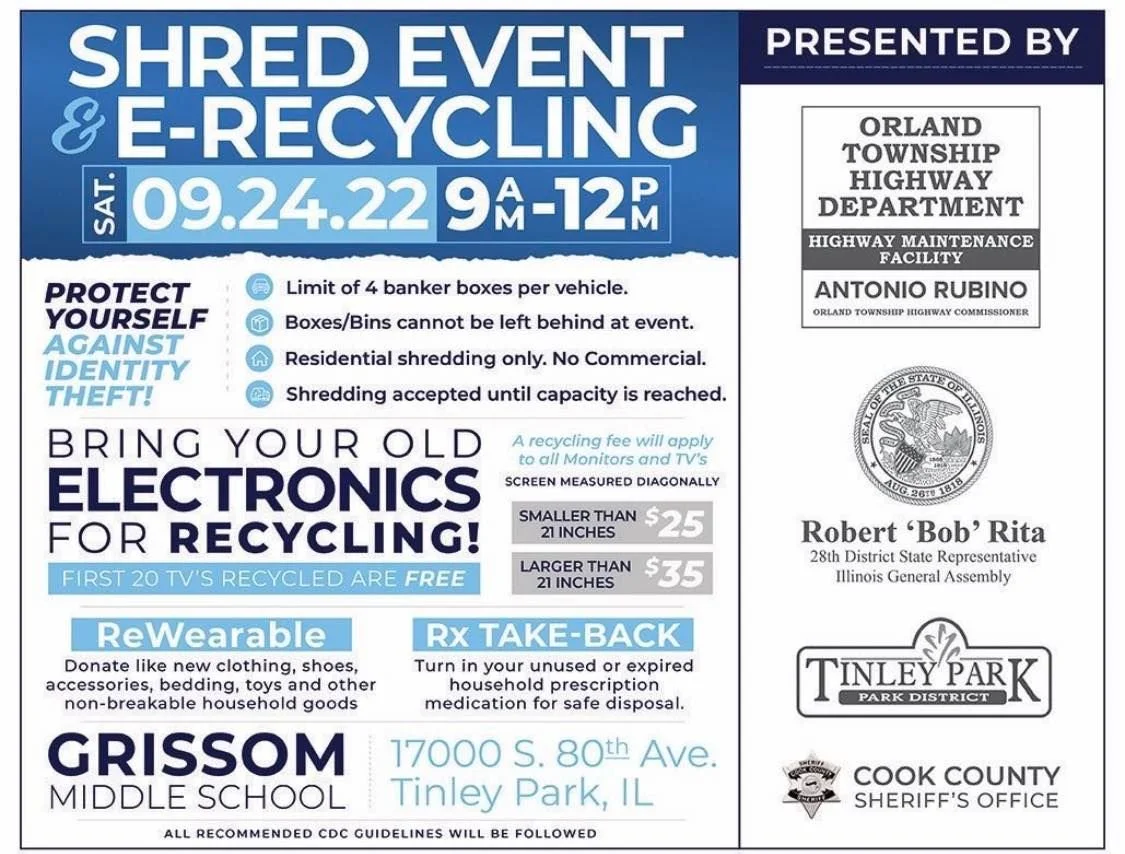
Shred Event - Saturday August 24th, 2022.

RH Business Marketing Solutions

If you guys know Kevin, you know he’s a hoarder: this is a great way to make room for all his new treasures(garage sales and flee markets finds).
**if you ever see him at the flee market, walk up to him and tell him he DOES NOT need that 1970’s spaghetti stained tupperware.

Do you have items that need shredding or need to be recycled???? Make room in your house or place of business.

Saturday, September 24th, 2022
between 9AM and 12PM
At Grissom Middle School
17000 S. 80th Ave in Tinley Park

7 Common Causes Of Water Damage In Your Home

RH Business Marketing Solutions

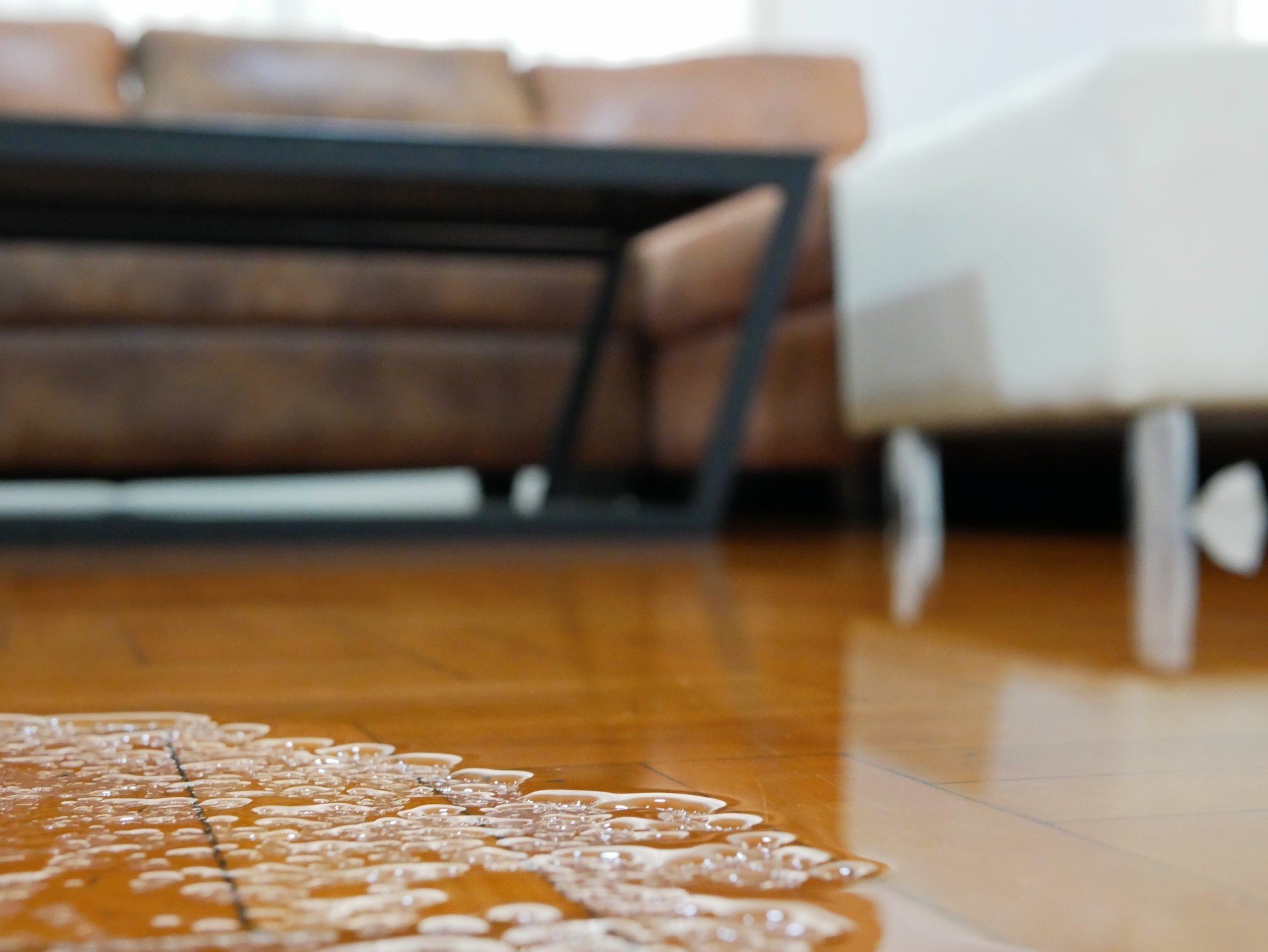
Water damage can be a huge problem for any homeowner. Not only is it unsightly, but it can also lead to mold growth and structural damage. Apart from these issues, water damage can also lead to health problems. 

Unfortunately, it can also be one of the most expensive to repair. Water damage can occur for various reasons, ranging from plumbing leaks to heavy rains. Therefore, it's essential to be aware of them so you can take steps to prevent them.

Here are seven of the most common causes of water damage in homes:

1. Leaking Or Burst Pipes

One of the most common causes of water damage in your home is leaking or burst pipes. This can happen for many reasons, such as wear and tear, freezing temperatures, and tree roots growing into the pipe. If you have a pipe leaking, or if you suspect that your pipes might be at risk of bursting, you should call a plumber immediately to have them fixed. You may visit this page or contact professionals near you to prevent water damage in your home.  

2. Severe Weather

Severe weather is another common cause of water damage in your home. Strong winds can break windows and allow rainwater to enter your home, while heavy rains can cause flooding and leaks. Even something as simple as clogged gutters can lead to water damage, as the accumulated water can seep into your home and cause mold and mildew to grow. As a result, it's important to be prepared for severe weather and take steps to protect your home from water damage. 

For example, you should regularly check your gutters and downspouts to ensure they're clear. Moreover, you should also have a plan for what to do if your home suffers water damage. Being prepared can help minimize the damage caused by severe weather.

3. Sewage Backup

Another common cause of water damage in your home is sewage backup. This occurs when sewage from the main line backs up into your home through the drains. It can happen for many reasons, such as a clog in the main sewer line or a blockage in your home's drains. 

A sewage backup is extremely dangerous as it can contain harmful bacteria and viruses that can cause serious illness. If you suspect a sewage backup in your home, you should call a professional immediately to have it cleaned up.

4. Groundwater Intrusion

Groundwater intrusion can happen without any warning. When groundwater rises due to heavy rains or other conditions, it can seep into foundations and walls, causing severe damage. Sometimes, the water table may rise so high that it floods your basement or crawlspace.  

Even if the water doesn't reach that level, it can still saturate the ground around your foundation, putting pressure on your walls and causing cracking and leaking. Unchecked groundwater intrusion can lead to severe structural problems that can be very expensive to repair. 

5. Appliance Leaks

Washing machines, dishwashers, and water heaters can develop leaks over time. In some cases, the leak may be minor and won't cause much damage. Trouble can start with a small drip, but it doesn't take long for a leaky appliance to cause extensive damage. Water can quickly ruin floors, walls, and ceilings, and it can also lead to the growth of mold and mildew. 

In addition, appliance leaks can be tricky to spot since they may not be immediately visible. A leaky dishwasher, for example, may not show any signs until the floor beneath it is saturated. Therefore, regularly inspecting your appliances for signs of leaking, such as rust or water stains, is important. If you do find a leak, be sure to have it fixed as soon as possible to prevent further damage.

6. Sump Pump Problems

If your home has a sump pump, it's essential to keep an eye on it to ensure it's working correctly. A sump pump is designed to remove water from your home accumulated in the sump pit, typically located in the basement. However, if the sump pump fails or is not working properly, the water can overflow into your home and cause serious damage. Therefore, it's vital to test your sump pump regularly and have it serviced if necessary.

7. Poorly Maintained Gutters

Gutters are essential to your home's drainage system and play a crucial role in preventing water damage. Gutters channel water away from your home and prevent it from seeping into the foundation or leaking into the basement. However, if gutters are not properly maintained, they can become clogged with leaves and debris, which can cause water to back up and overflow.  

In addition, a poorly maintained gut can also lead to leaks and cracks, which can allow water to enter your home. Therefore, it's necessary to regularly clean your gutters and ensure they are in good working condition.

Wrapping Up

Water damage is a serious problem that can cause extensive damage to your home. By being aware of the common causes of water damage, you can be proactive in preventing it from happening. Furthermore, if you experience water damage, it's important to act quickly to minimize it.

DIY Basement Flooring: 10 Flooring Options You Can Choose From

RH Business Marketing Solutions

When you think of a basement floor, "cozy" isn't usually the first thing that comes to mind. Instead, you probably imagine some chilly, hard concrete that becomes disgustingly filthy and makes your feet feel weird after walking across it in socks. But it doesn't have to be that way! With a little bit of effort and the right materials, your basement floor can be transformed into something warm, comfortable, and yes - even cozy.

There are a few things though that you'll need to take into consideration before choosing your new basement flooring, such as:

  • The condition of your existing concrete floor - is it cracks that can be fixed by filling with epoxy, or is it stains, or otherwise in need of repair? 

  • The amount of foot traffic your basement gets - will it be a high traffic area or will it see more occasional use?

  • Your budget for the project - some materials are more expensive than others

Once you've taken those factors into account, you can start exploring the many different basement flooring options that are available to you.

Why Picking the Right Material Matters

When you are trying to figure out what material is best for your home, it's important to understand that not all materials are created equal. There are many factors that come into play when choosing the right flooring. And one of those factors is foot traffic. If your floor experiences high foot traffic, meaning a lot of people are walking on it every day, you want to make sure that the material can withstand that wear and tear.

Next, is the ease of maintenance. You want to choose a material that won't require a lot of work to keep it looking good. If you have to spend hours every week scrubbing and cleaning, it's probably not the best option for you. The weather also contributes to the type of material you should choose. If you live in an area that experiences a lot of moisture, then you want to make sure the material you choose can withstand that moisture without becoming damaged.

Finally, you need to take your budget into consideration. Some materials are more expensive than others and if you're working with a limited budget, you'll need to choose accordingly. But even if you have a limited budget, there are still some great options available that won't break the bank.

Let's take a look at some of the best basement flooring options available.

The Best Flooring Options for Your Basement

1) Laminate Flooring

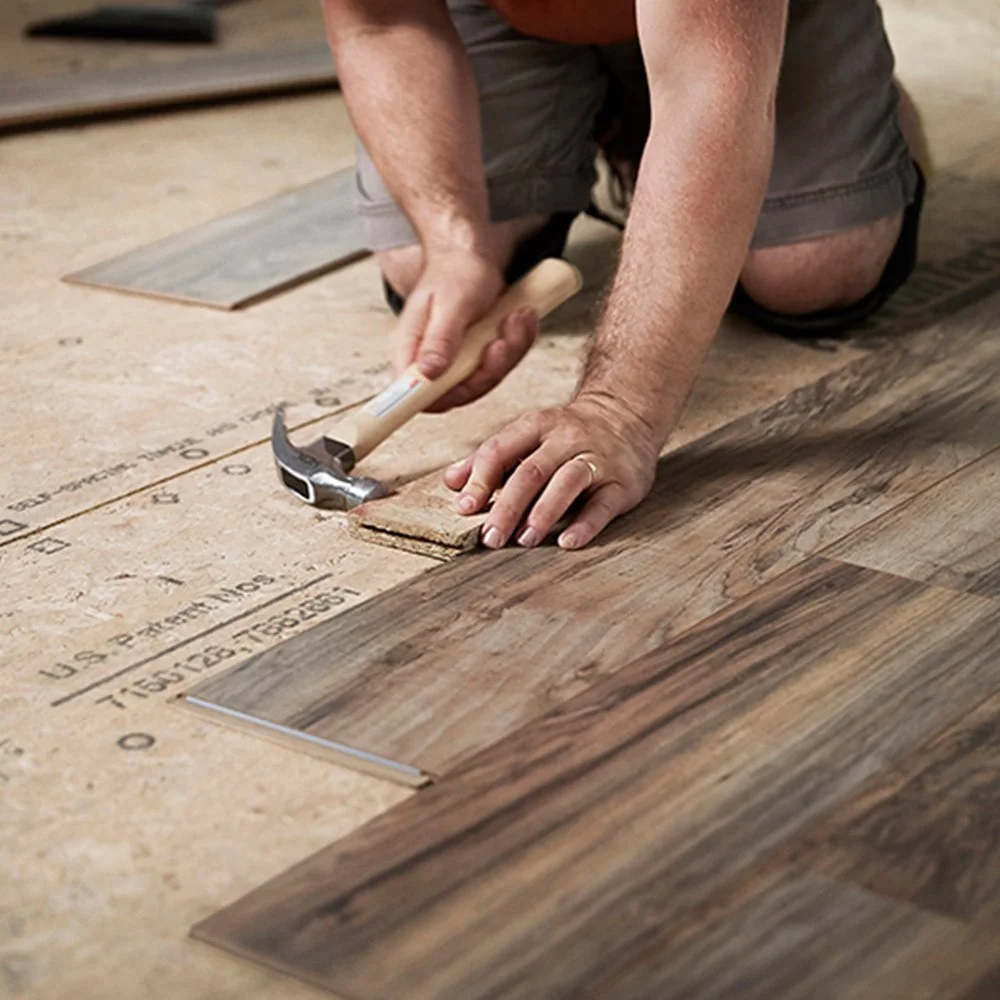
Laminate flooring is a synthetic material that is made to look like wood. It is composed of multiple layers of material that are fused together with heat and pressure. Laminate flooring is a popular choice because it is very durable and easy to maintain. It is also resistant to scratches, stains, and fading. Nowadays, it comes in a variety of colors, styles, and textures. You can choose from a variety of wood species, including oak, maple, cherry, and more. You can also find laminate flooring that looks like stone or tile plus, using laminate flooring is another way of achieving the look of hardwood floors without the high cost.

Pros:

  • Durable

  • Easy to maintain

  • Resistant to scratches, stains, and fading

  • Inexpensive

Cons:

  • Can't be refinished like real wood

  • Can be damaged by water

2) Engineered Wood Flooring

Engineered wood flooring is a type of wood flooring that is made up of multiple layers of wood. The top layer is a thin veneer of real wood, while the bottom layers are made of plywood or hardwood. Engineered wood flooring is very stable and less likely to warp or cup than solid hardwood floors. It can also be installed over concrete subfloors. Engineered wood comes in a variety of colors, styles, and wood species. It can also be stained and refinished just like solid hardwood floors.

This type of flooring is particularly popular because it is more stable than solid hardwood. In addition, it is also less susceptible to shrinking and expanding with changes in humidity and temperature.

Pros:

  • More stable than solid hardwood

  • Less susceptible to shrinking and expanding

Cons:

  • Can be damaged by water

  • The veneer is not as thick as solid hardwood

3) Solid Wood Flooring

Solid wood flooring is exactly what it sounds like—it is made of solid pieces of wood. It is the most traditional type of wood flooring and has been around for centuries.

Solid wood flooring is very popular because it is very durable and easy to repair. It can also be refinished multiple times, so it can last for many years.

Solid wood flooring comes in a variety of colors, styles, and textures. You can choose from a variety of wood species, including oak, maple, cherry, and more.

Pros:

  • Very durable

  • Easy to repair

  • Can be refinished multiple times

Cons:

  • Can be damaged by water

  • Requires more maintenance than other options

4) Brick Pavers

Brick pavers are a popular choice for basement floors because they are very durable and easy to maintain. They are also resistant to stains and fading. Brick pavers come in a variety of colors, styles, and textures. You can choose from a variety of bricks, including clay, concrete, and more.

Pros:

  • Durable

  • Easy to maintain

  • Resistant to stains and fading

Cons:

  • Can be cold to the touch

5) Bamboo Flooring

Bamboo flooring is a type of wood flooring that is made from the bamboo plant. It is a very popular choice because it is sustainable and environmentally friendly. It is also very durable and easy to maintain.

It is also a popular choice especially in tropical climates because it is resistant to moisture and insects.

Pros:

  • Sustainable and environmentally friendly

  • Durable

  • Easy to maintain

  • Resistant to moisture and insects

Cons:

  • Can be damaged by water

6) Linoleum Flooring

Linoleum flooring is a type of flooring that is made from natural materials, including linseed oil, cork dust, wood flour, and limestone. It is a popular choice for many because it is affordable and easy to maintain. A lot of those who rent their houses choose this flooring option because they can install it themselves.

Pros:

  • Affordable

  • Easy to maintain

  • Can be installed by renters

Cons:

  • Not as durable as other options

  • Subject to staining and fading over time

7) Concrete Flooring

Concrete flooring is a good choice for basements and other areas because not only a concrete floor is a low-cost flooring option, but it is also very durable and easy to maintain. In addition, a concrete basement is also resistant to mold and mildew which is why many people  who have allergies or asthma choose this flooring option according to Aluneed.

A concrete floor comes in a variety of colors, styles, and textures. You can try a concrete stain or a sealant to give it a unique look. You can also choose from a wide variety of concrete paints,  which can be used to create different designs to personalize and amp up your living space. This option is quite common in the basement for it is very easy to maintain and easy to clean. However, it requires regular cleaning as it accumulates dirts overtime if it’s not being taken care of.

Pros:

  • Durable

  • Easy to maintain

  • Resistant to mold and mildew

  • Easy to clean

Cons:

  • Can be cold to the touch

  • The surface can be uneven

8) Tile Flooring

Tile flooring is a type of  flooring that is made from a variety of materials, including ceramic, stone, glass, and more. It is a popular choice for many because it is very durable and easy to maintain. In addition, tile floors are also fire resistant which makes them a good choice for homes with young children. IInstalling a tile floor in your basement may be a great way to have some fun with design while also rapidly covering over existing concrete floors.

If you want a tile floor that is warm and comfortable underfoot, it's important to select the right material before installation. A concrete subfloor can be expensive but  they also provide good insulation. If you are looking for an inexpensive option, however, you can always use a self-leveling underlayment  which will help to create a smooth surface for your tiles.

Pros:

  • Can last a lifetime

  • Easy to clean and maintain

  • Fire resistant

  • Can be used to create a variety of designs

Cons:

  • More expensive than other options

  • Can be cold and hard on the feet

9) Carpet Tiles

Consider carpet tiles for a warm and comfortable basement floor that is also easy to install and maintain.  Installing carpet tiles is easy and many homeowners love the idea of carpet floors for basement flooring because  they can add color and style to the space. Not to mention, they are also very affordable. As for designing your basement floors, with carpet tiles, you can create a bright design with various hues or stick to a more traditional hue and contrast combination.

Pros:

  • Can be installed by homeowners

  • Very affordable

  • Add color and style to the space

Cons:

  • Not as durable as other options

  • Can be damaged by water

10) Rubber Tiles

Lastly, rubber flooring is a type of flooring that is made from recycled rubber. It has become a popular choice for many because it is sustainable and environmentally-friendly. These are ideal for family home gyms or anyplace where there is a lot of activity. They can endure a lot of abuse and are great for places that will be subjected to lots of use. Rubber flooring is also very durable, slip-resistant, and easy to clean.

They're also rather low-cost and simple to put together, good for DIY projects. Most homeowners can get their flooring covered in a few hours or less.

Pros:

  • Sustainable and environmentally friendly

  • Durable

  • Slip-resistant

  • Easy to clean

  • Soft and shock-absorbent

Cons:

  • Can be damaged by water

  • Requires more maintenance than other options

Conclusion

There are many different types of flooring ideas that you can choose from for your basement. Each type has its own set of pros and cons that you should consider before making a decision. In the end, it is important to choose a flooring option that is right for your needs and budget.

Guest Contributor: Rachel

6 Tips to Help You Move Into Your New House

RH Business Marketing Solutions

Whether you’re moving to a new home for affordable living or because of a growing family, packing your household stuff, transporting it safely, and organizing it is a daunting feat to achieve. Starting preparation early on and making a solid plan for relocating is a must. Read on as we enlist proven tips to make your relocation to your new home a breeze.

1. Make Inventory

Start with enlisting all of your household items under different categories or color codes. Doing this will help you keep a record of the items. The list can also be used for insurance purposes. After you are done making an inventory, make another list dividing these items into 2 categories: the items you use the most and the stuff that you never use. 

The household items you never use will only take up space while transporting. It's best to de-clutter these items by distributing them to charitable organizations, giving them to a friend, or putting up a yard sale to make use of these items. Packing and moving your stuff will be a lot easier when you have less stuff to deal with. 

2. Inspect The Premises

Before calling the movers, inspect your new household and make sure the property is in tip-top shape. Do a walk of the property to identify any signs of structural damage, sanitary malfunctions, etc. If you want to further upgrade the household by installing an HVAC system or go energy-efficient with solar energy, now is the time to make the necessary upgrades before moving in. 

You should also look at the sales contract if you are purchasing a used home. The sales contract will contain all the relevant information about what will be covered in the contract. You need to keep an eye out when relocating to a used home. Make sure the agreed-upon repairs are done and everything ranging from power outlets to the roof is intact without any issues.     

3. Calling Professional Movers

You might be surprised by the stuff you already have in your household. Packing all the items into boxes, safely transporting, and unpacking is not everyone’s cup of tea. There’s even a possibility that you need to relocate to another state or a city. Transporting on your own is risky as well as time-consuming. By getting a cheap local mover, you can take a load of stress off your hands, as they provide transportation facilities at affordable prices. However, when picking a mover, make sure to check the quality of services they are providing. A reliable mover will have a name in the industry and plenty of testimonials to back their claims. 

Furthermore, compare the quotes each mover provides so you can pick an affordable option. Due to a competitive industry, you will surely get a lower quote from companies. One more thing to look into is reviewing the terms and conditions of your contract. See who will bear liability if an accident occurs and ensure your household goods are transported safely. 

4. Unpacking Stuff

The way you arranged your appliances, furniture, and other household stuff earlier might not be possible in your new home. Instead of replicating the way things were placed in your old home, rethink the arrangement according to the new space. When packing stuff, make sure to use a color-coded system so it becomes easier for you to unpack it later on. 

5. Cleaning The Premises

Before the boxes come in, dedicate some time to deep clean your new home. Even if the contractor or real estate agent has cleaned the space for you, it is still crucial to clean it on your own. Doing this will take care of mold, dander, or debris that might cause allergies or trigger any respiratory illness. Start with cleaning high then go low. 

Lighting, fixtures, ceiling fans, and shelvings should be cleaned first before moving on to the floors. However, if you don’t have the right expertise, consider availing of deep cleaning services that will help in making your new home squeaky clean. 

6. Ask For Help

Whether you hire movers or not, you will still need some help in transporting, packing, and sorting through the stuff. Make sure to inform everyone involved early on so they can join in. Weekends are a great choice as most are off work on weekends, making them free to help out. You can also delegate tasks to friends so the process of moving household items remains streamlined.

The tips we shared above can easily make moving to your new home a hassle-free experience. It’s still a lot of work so never hesitate to seek help, whether you receive it from peers, family, or a service provider. Happy moving! 

6 Tips To Help You Deal With Construction Waste

RH Business Marketing Solutions

Construction waste is one of the biggest issues faced by the world right now. Even though waste of all sorts is dangerous, construction waste poses a special threat. Whether it's wood, cement, or chemicals, they need to be handled in a sophisticated way. Dealing with construction waste can be quite challenging, especially if it's in large quantities. Waste control and disposal are serious matters as they directly impact the environment we live in. In this article, we'll look at 6 tips to help you deal with your construction waste.

1. Reduce The Waste 

To manage your waste properly, the first thing you can do is reduce its creation. Less waste means fewer problems and more waste means more problems. Reduction of waste, however, isn't as easy as it sounds. The idea is to increase the life cycle of old structures and optimize it in a way that you don't have to construct new ones or demolish old ones. This isn't just going to reduce waste but also save you a handsome amount of cash. Once you decrease the sources, the production of waste automatically decreases. 

2. Find Suitable Disposal Techniques 

Waste disposal is one of the most challenging tasks. With a mix of so many materials, it's not feasible to dump them all in one remote location. Disposing of waste needs to be cost-effective, thorough, and safe. As suggested by Virginia Beach dumpster rental services at https://virginia-beach.bintheredumpthatusa.com/dumpster-rental-newport-news-va, use tagged bins for the proper disposal of different types of waste. You can also hire a waste disposal service for this purpose. Make sure that you choose a competent service, one that has the right equipment and knowledge to deal with your waste. 

3. Recycle Your Waste

Recycling your waste can prove extremely beneficial for you. The majority of waste products can be recycled and reused. However, some substances cannot be used for this purpose. Make sure that you're separating the recyclable and non-recyclable materials properly. Many metals, polymers, and construction materials are recyclables and can benefit you further. Wood can be used for furniture while gravel is usually made from recycled concrete waste. Recycling isn't just great for the environment, it can also save you a lot of money on your construction project.

4. Reuse Your Waste

Some waste products can be directly reused. Most products can be incredibly beneficial even though they may seem like trash for your construction project. Gravel and asphalt are the two best examples of this. They can be transported and used in various other projects. Waste reuse is one of the best ways to protect our environment. Materials such as plastics and wood along with insulating materials can directly be used again in one way or the other. Recovered bricks from a demolished structure are likely to be in a good condition to be reused. 

5. Disposal of Hazardous Waste

One of the biggest mistakes people make is the disposal of hazardous waste. It's extremely dangerous for the environment. Some compounds can be carcinogenic as well. Disposal of hazardous waste needs to be taken carefully. Be careful not to mix hazardous waste with normal waste to dispose of it. The best practice is to dispose of these dangerous products at a hazardous waste disposal facility. They are deadly for the environment in the short term as well as the long term. These products need to be carefully processed before disposal. Make sure to label your trash bins so you don't end up mixing such materials with others. 

6. Donate Construction Waste

Sometimes, your trash can be another person's luxury. If you can't find suitable disposal methods, you should consider donating your waste. As we've established earlier, construction waste is dangerous for the environment and it's better if it's reused than thrown away. It can be donated to anyone as building debris can come in handy sometimes. This is also environmentally friendly and can have a positive impact on your construction company's reputation. Moreover, it may also help someone in need. 

Managing construction waste is difficult, to say the least. The first step is to try and reduce the waste produced. Afterward, you can try to recycle the recyclable products. Find ways to reuse your waste as some of the products can be repurposed. Some products just can't be reused or recycled, and you'll need to dispose of them carefully.

Consider hiring a waste disposal service or, if you have the knowledge and equipment, dispose of it yourself. Don't mix hazardous materials with ordinary construction waste as it can be quite problematic. It is of the utmost importance that you manage your waste properly as the majority of the states have waste management laws.