Google+

contact us

Use the form on the right to contact us.

Day or Night, we are here to serve you. Leave your plumbing problem to us.


Tinley Park, IL

(708)845-7922

Residential and Commercial plumbers and plumbing contractors available in Orland Park, Tinley Park, Oak Lawn, Palos Heights, Midlothian, Oak Forest, Homer Glen, Mokena, Frankfort, and the surrounding Chicago South Suburbs. Emergency plumbers.

copper water lines.jpg

Kevin Szabo Jr Plumbing Blog

Kevin Szabo Jr Plumbing is Tinley Park, Orland Park, Oak Forest, Midlothian, Orland Hill, Homer Glen, Mokena, Frankfort, Crestwood, Palos Heights, Oak Lawn, local plumber. Read our blog for advice, tips, a good laugh, and basic home improvement.

**We are moving our old blog to our new and improved website. Too see all our posts visit kevinszabojrplumbing.blogspot.com

7 Home Renovation Ideas to Get Ready For Summer

RH Business Marketing Solutions
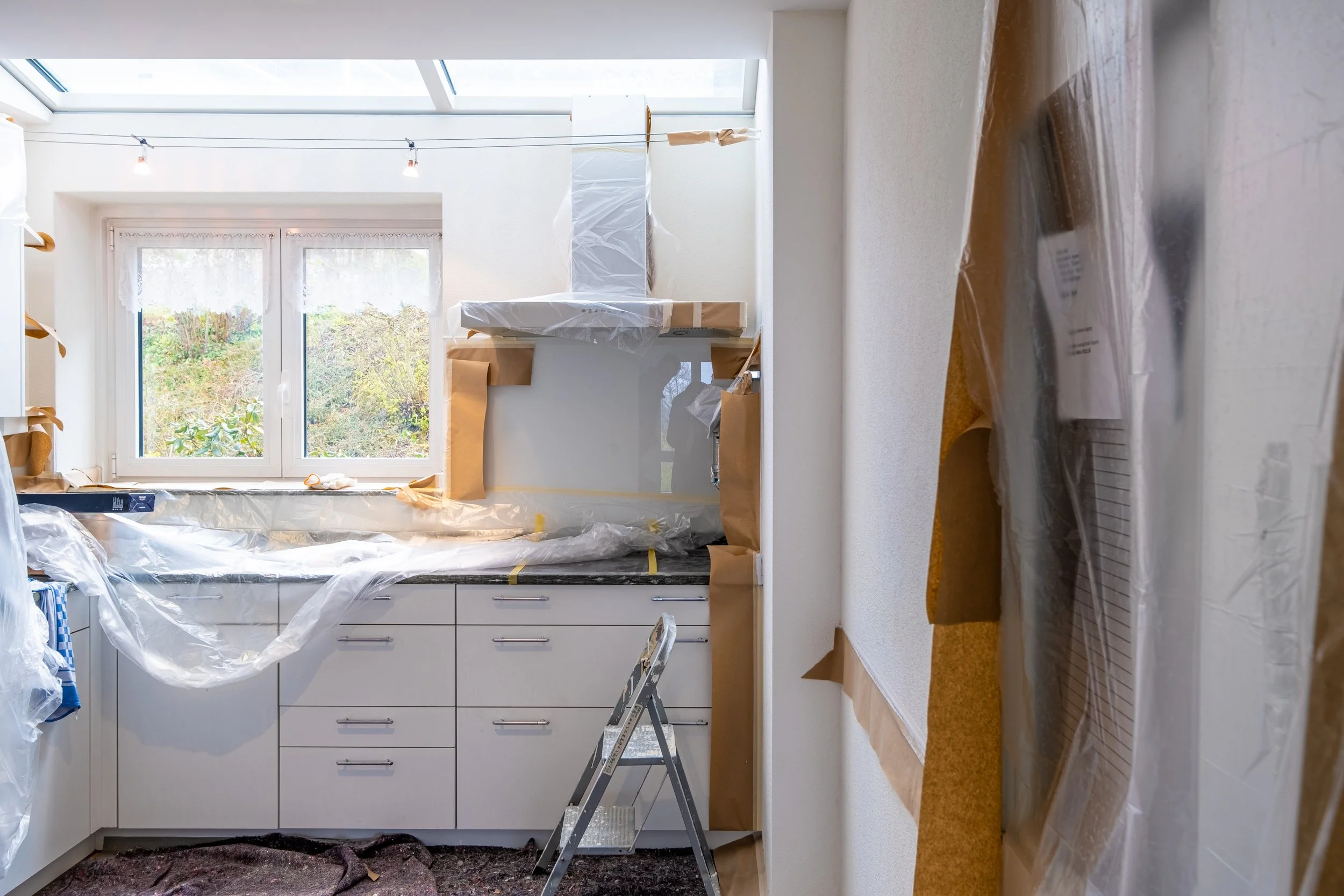
Summer is a time of renewal and rejuvenation.  It’s a season for new beginnings and fresh starts, which makes it the perfect time to spruce up your home with some much-needed renovations. Homeowners continue to have a strong desire to remodel in 2023, with 55% of homeowners expecting to do so this year . Whether you want to change the look of your kitchen or add a personal touch to your bedroom, there are plenty of ways that you can upgrade your home for the summer season. Here are 7 home renovation ideas to get you started:

Paint your walls a light, airy color to reflect the summer sun

Painting your walls a light, airy color can help you feel refreshed and revitalized as the summer sun shines in.  This is because colors have been shown to affect mood, so painting your room with bright shades of yellow or orange will make you feel invigorated and cheerful. Painting your walls a lighter shade also helps reflect sunlight coming into the room, making it appear brighter and more welcoming.

Install new window treatments to let in the breeze

It can be difficult to find the perfect window treatments for summer, especially if you’re looking for something that will let in the breeze this summer.  The best option is a sheer fabric treatment with vertical slats or horizontal slats. This type of window treatment allows air and light while also providing privacy from outside views. Another great option is to install plantation shutters, which give your home a classic look while still allowing you to control the amount of light and air coming in.

Replace your old flooring with something cool and refreshing

Replacing your old flooring with something cool and refreshing, like bamboo or cork, can help you feel more invigorated and refreshed as the summer sun shines in. This is because both bamboo and cork are natural materials that help to cool down a room by absorbing heat. They are also both durable and easy to clean, making them perfect for high-traffic areas like the kitchen or bathroom. Replacing your flooring is also a great way to add value to your home, which is especially important in today's market. New flooring can be a great way to help you get competitive rates to refinance your home with the added home value.

Update your kitchen cabinets with a light wood finish or white paint

If you’re looking for a way to give your kitchen a quick and easy makeover, updating your kitchen cabinets with a light wood finish or white paint is the perfect solution. This is because both light wood finishes and white paint can help to brighten up a space, making it feel more airy and spacious. In addition, both light wood finishes and white paint are easy to clean and maintain, so you won’t have to spend hours scrubbing away at dirt and grime.

Add a sunroom or screened-in porch to enjoy the outdoors without the bugs

Adding a sunroom or screened-in porch to your home is a great way to enjoy the outdoors without having to deal with the bugs.

Sunrooms are perfect for enjoying the warm weather while being protected from the sun, and screened-in porches are perfect for keeping the bugs at bay. Both of these additions can be added relatively easily and will give you an extra space to enjoy the summer months.

Install a ceiling fan in every room for circulation

Installing a ceiling fan in every room is a great way to circulate air and keep your home cool during the summer months.

Ceiling fans are a great way to save energy and money, and they can help to keep you cool without using air conditioning. In addition, ceiling fans can also help to improve your indoor air quality by circulating dust and allergens.

Install a water feature

Installing a water feature, like a fountain or waterfall, is a great way to cool down from the heat.

Water features are not only beautiful to look at, but they also have many other benefits, like the ability to cool down the surrounding air by up to 10 degrees. This makes them the perfect addition for anyone looking to stay cool during the hot summer months.

Home renovations can be a great way to prepare your home for summer. By making some simple changes, like painting your walls a lighter color or installing new window treatments, you can help your home feel refreshed and invigorated as the weather starts to warm up. In addition, there are a number of other home renovation ideas that you can use to get your home ready for summer. So, whether you’re looking to update your kitchen or add a new water feature, there are plenty of ways to prepare your home for the warm weather ahead.

Guest Contributor: Andrew Adams

Things You Should Remember When Buying a Garage Door

RH Business Marketing Solutions

Before buying something, you want to ensure that what you’re getting is worth your money, right? You would want to get something that gives you the best value - good quality, highly effective and efficient, and satisfies your need. You would want a product that’s not underrated and has a long lifespan. This is true regardless of what item you are about to purchase, including one of the most neglected objects in your home – the garage door.

Homeowners often take for granted the importance of their garage doors. As long as it functions as expected and looks good, they’re all right with buying whatever is available or what is offered to them. Sometimes, they base their choices on what they see in other homes – perhaps a friend’s or relative’s. However, what works for some homeowners may not work for others. There are always several significant factors to consider.

The only way to ensure that you’re getting your money’s worth is to choose good quality garage doors. It may take time, and you may have to exert extra effort, but it will all pay off. You can ask for assistance from your provider or follow tips on what factors are essential for making the right choice when purchasing a new garage door.

Factors You Should Consider When Buying a Garage Door

Choosing the right garage door is not just about looks or physical characteristics; it also means picking a product that answers your needs. Here are some essential factors and tips that you should consider before completing your purchase:

As much as possible, do not order online.

Nowadays, you can find practically everything you need online. So, it’s not surprising for you to consider getting one from an online retailer. While it’s already considered a normal practice, there are still some things that should be done offline, such as getting the details of the garage door. If this is done virtually, your options of communicating with the provider or sales representative are limited to focusing the camera on the door or sending a video of it.

If you compare this with the provider being there in the garage with you, examining the garage door and taking note of its size, type, shape, side clearance, and other vital aspects, you’ll realize the vast difference between the two. Conducting product checks physically is better than doing it virtually.

So, as much as possible, have the provider visit your home and physically check out the garage door. This way, you’ll be able to work out several options for the new one that you will be purchasing.

Determine the type of door you need.

Not all garage doors are created the same way. You have to know which type you have and if it is ideal for your circumstances. For example, if you have a fiberglass garage door but realize that you live in an area with extremely cold weather, you’ll have to consider this when choosing a new one. Here are your options:

●      Fiberglass – Fiberglass garage doors are some of the most durable, but they are also sensitive to extreme cold weather and can easily crack.

●      Wood – Wood garage doors are ideal for homeowners who value visual or curb appeal. They are also probably the most difficult to maintain.

●      Aluminum – If your area is constantly exposed to moisture, an aluminum garage door is ideal because it is resistant to rust and corrosion.

●      Steel – Steel garage doors are the most common option for most homeowners. They’re also the most affordable.

●      Vinyl – If you prefer garage doors that are easy to maintain but still guarantee durability, vinyl garage doors are the best choice.

What is your budget?

One of the things you should consider when choosing the right type of garage door is your budget. How much are you willing to spend? How much can you afford to spend? Choosing a wood garage door over a steel one may involve more money than you can afford, so these two factors have to go hand-in-hand. The best thing to do is determine your budget and do your best to stick with it.

In some areas, getting a new garage door can cost you a minimum of $600 and a maximum of over $3,000. However, you can ask your provider for suggestions on how to bring down costs. Most of them already include the installation fee in the total cost, but it is always better to ask your provider.

The most affordable garage door types are aluminum, steel, and wood. Fiberglass and vinyl are more expensive. Some providers will suggest installing a steel garage door and then applying wood stain on it if the homeowner wants to achieve the aesthetics of a wooden garage door. 

You must have the whole garage door replaced and not just a part of it.

Your garage door and home-style should match.

This is another aspect you need to consider (and may affect your budget). If you want your garage door to complement your home’s total look, you must choose a garage door that matches its style. For example, if your house is all-wood, steel or aluminum garage door would contradict your home’s style or theme and curb appeal.


Ask your contractor to show you perspectives on how your home will look using different garage doors. This will help determine which one best answers the aesthetic effect you are trying to achieve.

Don’t forget the safety features.

The overall quality of a garage door includes safety features, so be sure to keep this in mind when buying one. Here are some examples you might want to consider:


●      In case of a power outage, you can still use your garage if it has manual control features.

●      Child and pet protectors are also essential safety features.

●      Your child (and pet) will also be safe if your garage door has safety reverse sensors. This device ensures that there is nothing or no one under the door when it is about to close.

●      Protection from unwelcome outside forces (such as burglars) is easier if your garage door has an outside motion detector.

●      You may also want to go for garage doors with fingers-free features. This will prevent your child’s fingers from being jammed or stuck into the door’s railing.

Check the garage door’s insulation.

The right insulation for your garage door can help keep energy costs down. Ask for professional advice on which insulation type is ideal for your garage door and home. The R-value refers to the insulation rating, and you should be mindful of this. Choose insulation with a higher R-value if you want efficient insulation (especially during the cold winter months or on stormy days).

These are just some things you should keep in mind before or while buying a new garage door. Considering these factors and suggestions will help you choose the right door for your garage.

Guest Contributor: Evan Taylor

How To Set Up A Home Office

RH Business Marketing Solutions


Harry Emerson
/ July 10, 2020

For a long time, the ability to work from home was reserved for the lucky and privileged few, those who had supportive employers or who found a way to do it on their own. However, the 2020 COVID-19 pandemic has completely changed this.

At first, companies were required to have their employees work from home whenever and wherever possible as part of stay-at-home orders. Still, many more, including big names such as Google, Twitter, and Zillow have decided to allow employees to work from home longer term. Some studies suggest that around 20 percent of companies will implement permanent work-from-home policies for their employees moving forward.

The circumstances that have brought this change are tragic, but many people have been arguing for years that they can do their jobs from home. Now they have proof that it’s not only possible but, in some circumstances, much better than other setups since it can often lead to an improvement in productivity and engagement.

Successfully working from home requires you to set up a good home office or working space, which requires a bit more than you might initially think. Here’s everything you need to know to set up a workspace that will allow you to thrive.

Pros and Cons of Working from Home

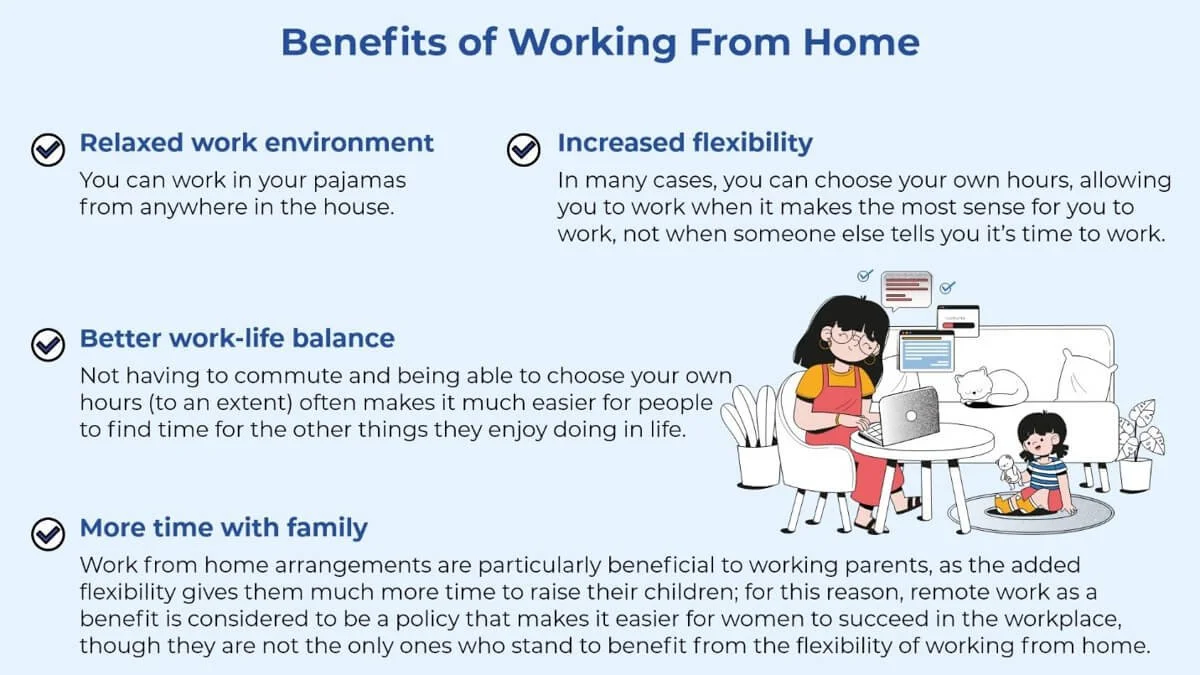
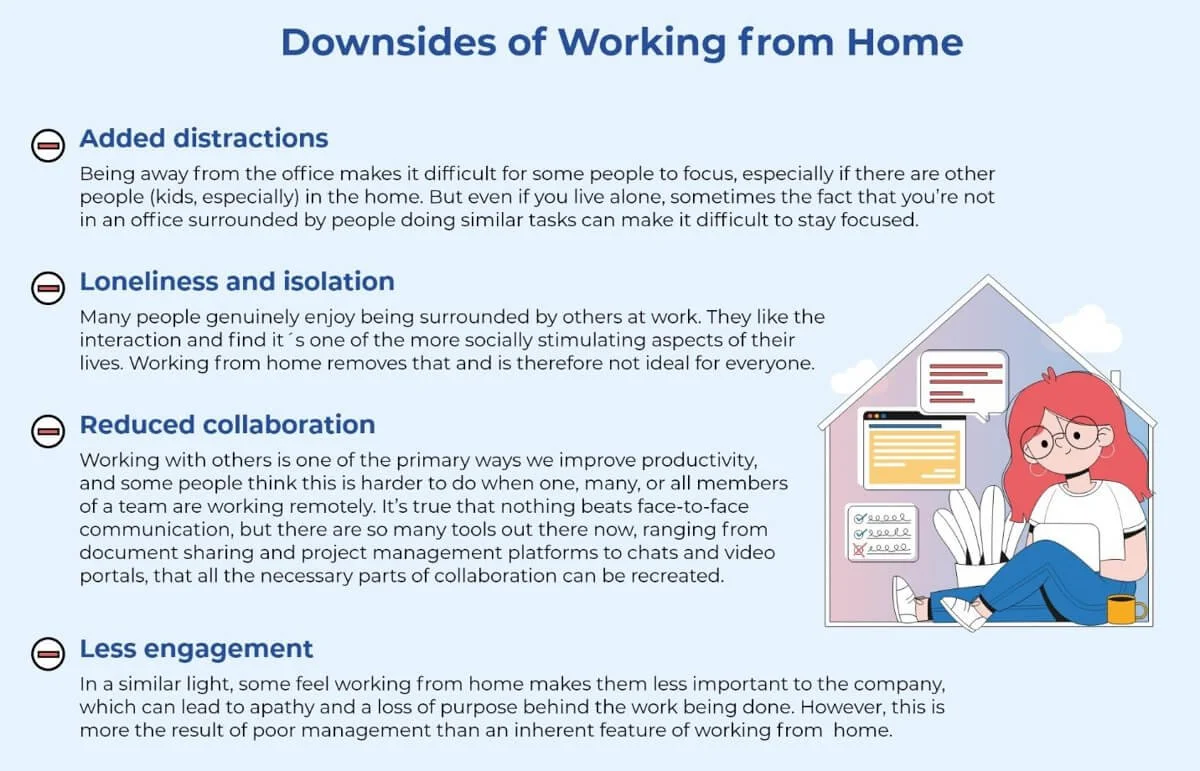
Before going into the specifics of how you should set up your office, it’s useful to review some of the pros and cons of working from home, as these will help highlight some of the challenges you may face in this new environment and how you can combat them with good design.

The main benefits of working from home include:

While working from home can have some pretty substantial positive impacts on life, there are also some downsides, such as:

In many cases, whether or not working from home is good or bad will depend on you as a person – what you like and don’t like about a working environment. But now that we know what some of the positives and negatives are, we can set out to build a home office that will set you up for success both now and in the future, assuming your work from home arrangement continue.

Step 1: Choose a Space

When setting up your home office, the first thing you need to do is to pick a space in your home that will be your work center.

What space you choose doesn’t really matter, but the most important thing is that you make it a dedicated area that’s only for work. For this reason, kitchen and dining room tables usually aren’t ideal, as these spaces are also used for lots of other things.

Ideally, you have a room in your home that you can convert into an office. A separate room is great because it has its own door, which you can shut, either signifying to yourself and others in the home that you’re hard at work or sending a message to yourself that you are done with work for the day.

However, in many cases, it’s simply not possible to section off an entire room. In these instances, the solution is to find a way to partition part of a room to distinguish it from the areas you use for other activities.

This is so important because having a dedicated space allows you to set up your things the way you want them without having to worry about moving them, and it also helps train your brain to know when it’s time to work. If the space you use is also where you eat, play games with the family, entertain, and more, you’re going to confuse your brain, meaning when you sit down, it won’t know what it’s supposed to do.

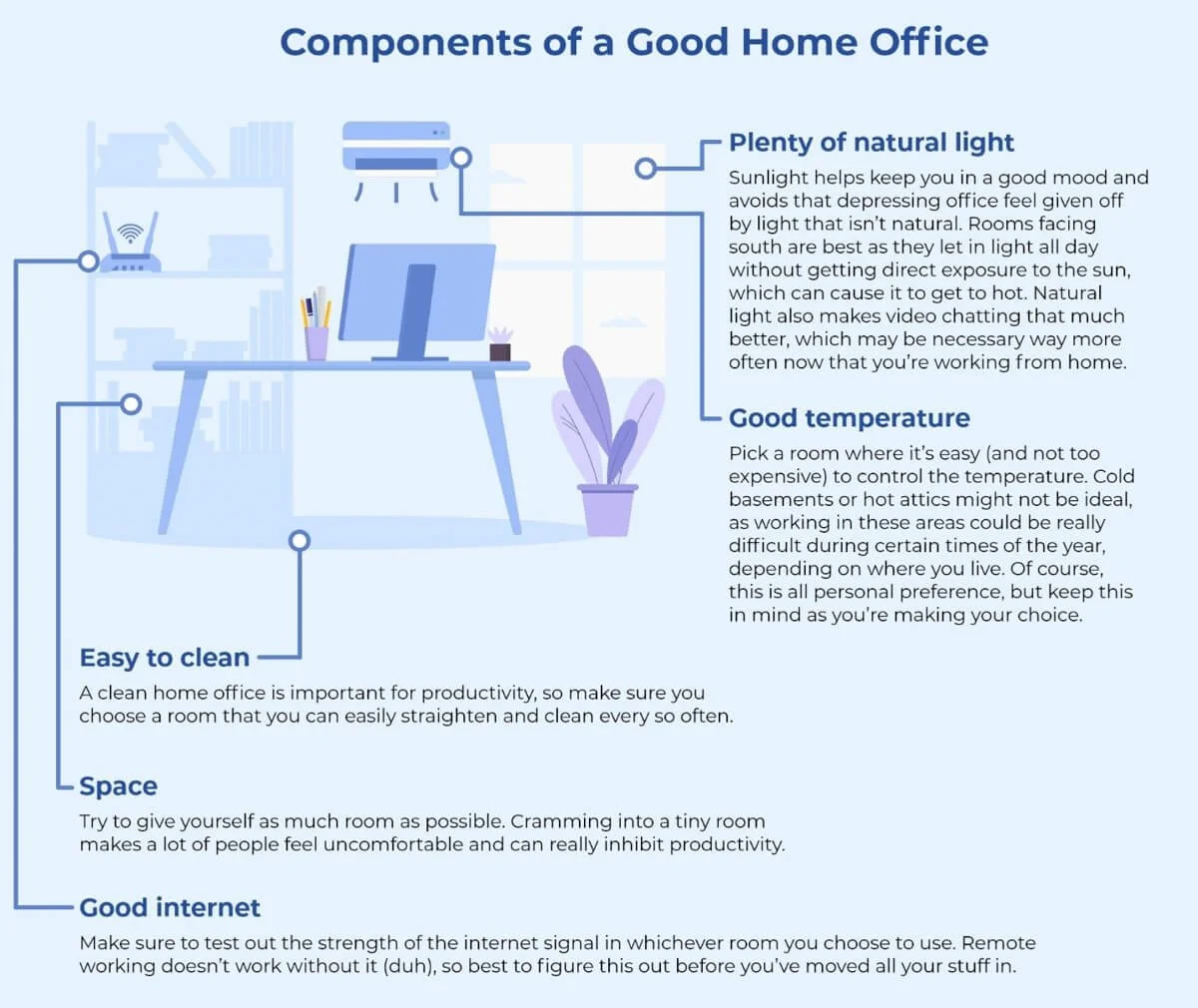
Components of a Good Office Space

Besides being separate from the rest of the house/room, a good home office will also have some or all of the following characteristics:

Of course, if you’re reading this and thinking, “I don’t have any of these things,” the first thing on your mind might be the expense you will need to incur. But there are plenty of ways to make these improvements without spending a fortune.

Saving Money While Equipping Your Office

The first thing you should do is contact your employer. Depending on the situation, they may be able to help ensure you have the right equipment. If you work for yourself, then know that a lot of the equipment you buy can be deducted as a business expense when you do your taxes. Remember, this only works for those who use their home office as their primary place of business, so it may not apply to those who also work in a physical location.

Another thing you will want to do is look for secondhand furniture and office supplies. Craigslist, Facebook Marketplace, and eBay are all great places to start your search. And lastly, you can also get creative. Have a great desk that’s just not quite high enough? Get or build a shelf to make your computer/laptop higher and make it easier to work. Or, even more simply, stack them on top of some books! It might not be pretty, but it’s a lot better than hunching over a desk and hurting your back, neck, and shoulders.

Step 3: Decorate Your Office

Once you’ve got your space and equipment, it’s time to decorate. You don’t need to spend a lot of time doing this, but it’s a useful way to help optimize the environment in which you work while at home.

An excellent place to start is painting. Brighter colors tend to create a more positive vibe in a room, and a fresh coat of paint can also do wonders to improve a particular space’s energy.

Beyond that, consider filling the room with other objects you like. Many people find photos of their friends and family comforting and helpful, whereas others might prefer more abstract art. One interesting thing to consider is hanging up images or other symbols of things towards which you’re working in life. Even in the best of times, work can be a grind, and when you’re at home, it’s very easy to fall into the trap of procrastination. Images that represent your goals help you stay on track during these moments and can also help spruce up the room.

When it comes to decoration, there is no right or wrong. The one thing you should be careful of, though, is clutter, which can negatively impact your efficiency and productivity. Some people don’t mind it, but if you over-decorate, this could be a problem. Instead, be mindful of your choices and put things up to serve a specific purpose and make you a better work-from-home employee.

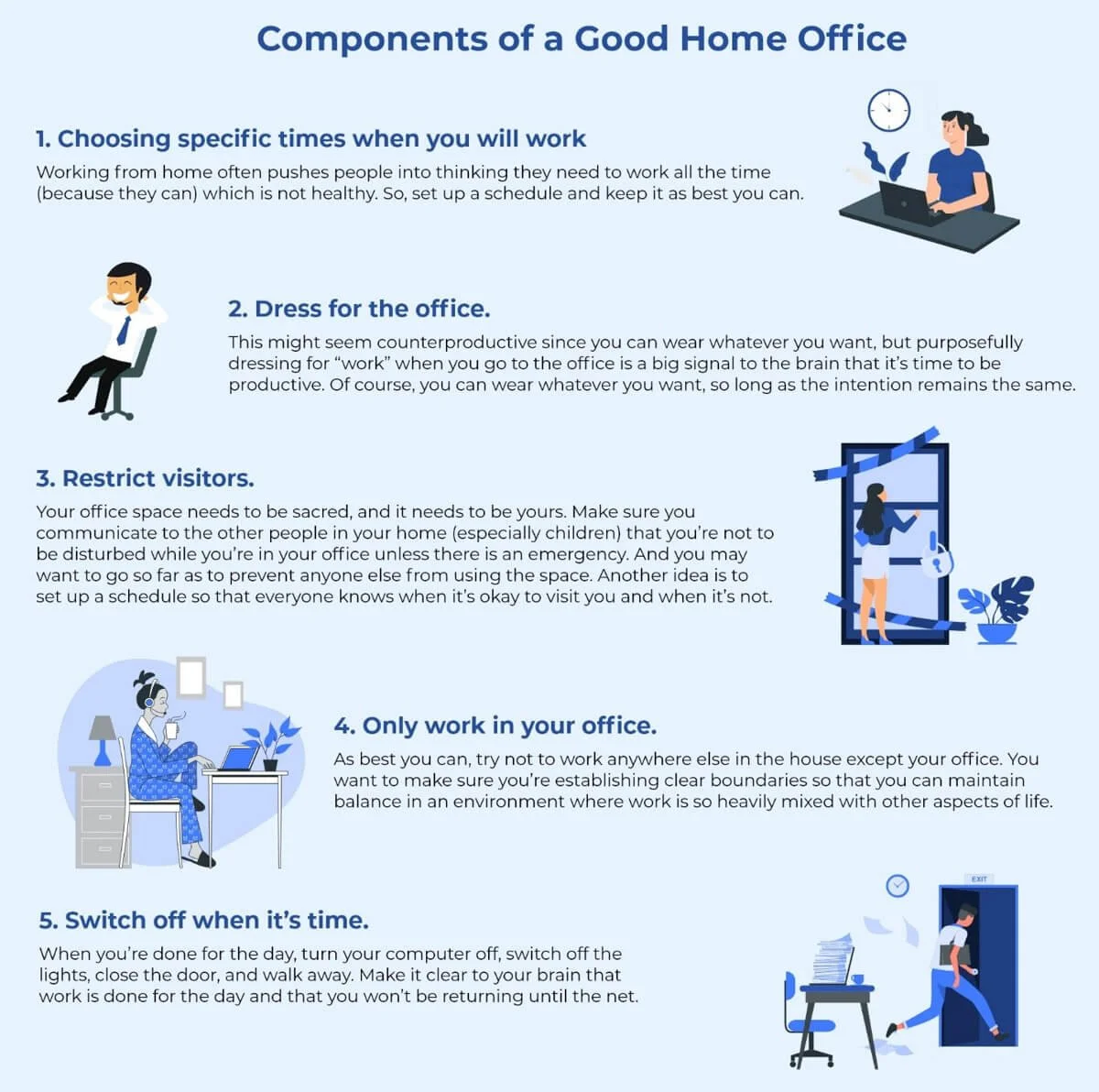
Step 4: Set Ground Rules

Lastly, with your home office all set up, it’s time to get to work. After you put so much time and energy into creating your office, it’s vital that you work to protect its sanctity as a place of work and productivity. To do this, consider setting up some ground rules for your new space. Some ideas for this include:

Start Building Your Home Office Today

If you’ve just started working from home recently, the sudden nature of this change has probably got you all over the place. But start now to make purposeful decisions and work to set up a functional home office to create an environment conducive to working hard and being productive.

Credits to: infinitydish.com


Infographic provided by Container Alliance, a top company to get a cargo shipping container for sale

7 Benefits of an Organized Kitchen

RH Business Marketing Solutions

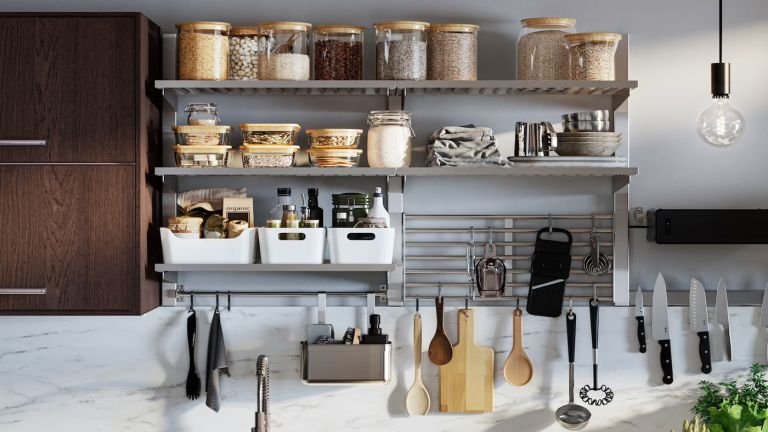
For many families, the most activity happens each day in the kitchen, even if people are mostly pouring cups of coffee, grabbing bag lunches, and heading out the door. If you’ve lived with the disorder and chaos of a kitchen with no system, you don’t have to live this way! Getting your kitchen organized can bring a ton of benefits over time that make the initial time investment well worth it.

Easier to Clean

If the countertops are cluttered and constantly shifting various piles of items, it’s so much harder to take good care of your kitchen. If, however, it is organized, you can quickly return items to their designated spaces, wipe down countertops and sink, and move forward.

Easier to Find Items

We all know the headache of knowing you’ve bought one or even two boxes of baking soda or another kitchen staple but then not being able to find it for the life of you. When you have an organized system, you can quickly zero in on each item you need, gather them, and get down to work.

Easier to Prep for a Future Sale

Doing a full kitchen overhaul during the busy work of prepping a home to sell is just another to-do list item that you really don’t need during a busy time. Instead, keep your kitchen functional and organized all the time, and it will only take a quick spruce to be ready for photos and showings.

Easier to Make Useful for Multiple Family Members

Whether you have a spouse who wants to pitch in for cooking or children who want easy access to their healthy snacks, organizing the kitchen helps many people use it, not just the primary chef. A disorganized kitchen may give children access to things that aren’t good for them, like the sharp knives of the kitchen, so this process makes for better kitchen safety as well.

Easier to Avoid Food Waste

When we don’t know exactly where and what is in our kitchen, it’s much easier to let fruits, veggies, and other food items go to waste because they expire. No one likes to waste a tasty, valuable food item just because it was hidden behind a pile of other foods in the fridge. An organized system should, ideally, let you sweep your gaze across pantry and fridge and know exactly what’s running low, what’s available, and where you could potentially use something before it goes bad. 

Easier to Cook Quickly

Let’s face it - no one these days has a lot of extra time to waste running back and forth around the kitchen to find each gadget and utensil they need. Even people who love cooking elaborate meals prefer to have everything close at hand, so extra time in the kitchen means extra love going into the food, not a bunch of wasted time.

Easier to Enjoy Food Time With Family

The kitchen is the heart of so many homes, and if your kitchen is organized, it’s easier to hop from task to task while enjoying a glass of wine with a friend, or while hearing about a child’s day at school, or while passing items to a spouse to put on the table. Removing some of the strain of a disorderly kitchen makes the core time together much richer and helps everyone relax after their days out and about.

Guest Contributor: Angeline Gonzales

What Do I Need to Look For on My Roof After a Storm?

RH Business Marketing Solutions

Our roofs are what keep us safe from the harsh outdoor elements. And whether it's from rain, snow, or hail—they protect you and your valuables. But even the most robust roofing systems get damaged during severe storms. Unfortunately, these damages aren't always the easiest to spot!

As a homeowner, you must be able to identify roof damage to avoid further problems. And the sooner you address them, the faster you can restore your home's safety, comfort, and privacy. If not, prepare for worse structural damage—and higher expenses.

Let's look at what you need to look for on your roof after a storm. Plus, how to spot the different signs of damage. 

Stay Safe By Inspecting Storm Damage

Before looking for damages on your roof after a storm, stay safe by first inspecting your home's exterior. If you see any flooding, downed power lines, and other electrical hazards, stay indoors and call 911. 

On the other hand, check for damaged shingles, fallen trees, ice dams, and other debris if you've gone through a winter storm. 

If everything's clear, continue to check for potential hazards, but this time, including your roof! Be especially wary when inspecting your roof as it's among the most dangerous places for post-storm damages. After all, not only can it cause structural problems, but it's also far from your line of vision. 

Once you see any storm damage on your roof, determine the primary cause to settle it the best and fastest way possible. Here are the different signs to watch out for to determine if you're dealing with hail, snow, or water damage:

Detecting Signs of Roof Damage from Hail

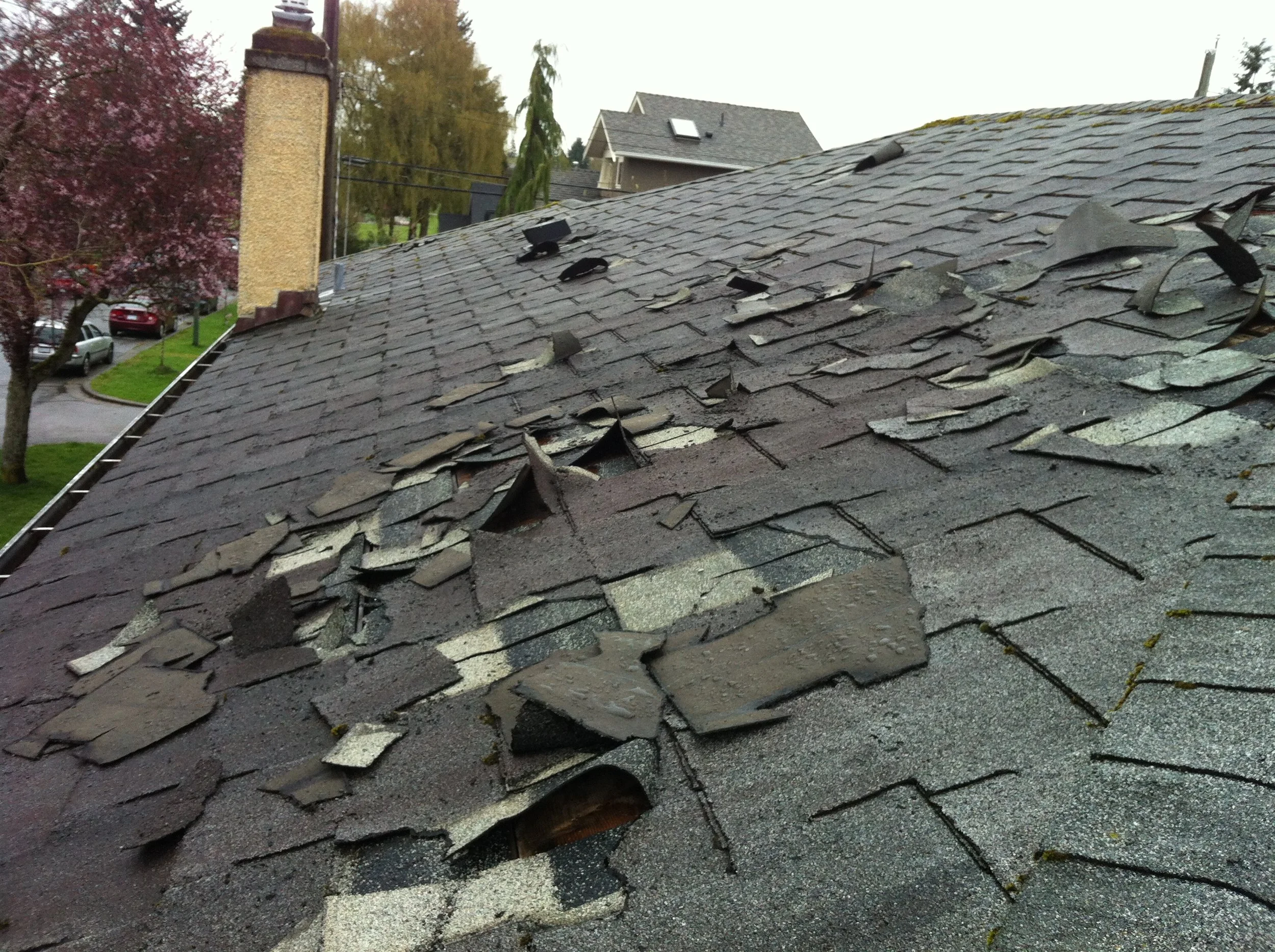
Hail damage is the easiest to distinguish on your roof. After all, you'll hear and see the tiny pellets of ice hitting your home and gathering on the ground. But it's easy to spot as it leaves dents on roofs or, worse, tears shingles off. 

Hail damage may cause the following damages to your roof: 

  • Damaged shingles. Hail can curl, buck, crack, or dent roof shingles. 

  • Missing shingles. Severe cases of hail can tear shingles off your roof, so look for gaps. 

  • Blocked gutters and downspouts. Hail can build up loose asphalt granules, clogging your gutters and downspouts. 

  • Damaged flashing and downspouts. Severe hail can dent, hang, or tear flashing or downspouts. 

Looking for Signs of Roof Damage Caused by Wind

Fast and robust wind speeds can knock over the most solid structures, knocking over trees, shattering windows, and damaging roofs. It can blow shingles off a roof, exposing your roof deck and underlayment. As a result, your home becomes more vulnerable. 

If you've experienced a heavy windstorm, here's what you need to look for on your roof:

  • Damaged shingles. Windstorms can crack, curl, or blow off shingles off your roof. For wooden shingles, they may become rotten or moldy. 

  • Clogged gutters. Granule might build up in your gutters. 

  • Damaged flat roofs. Severe cases of windstorms can crack, tear, or develop surface bubbles and wrinkles on flat roofs.

Checking for Signs of Roof Damage from Water

The effects of water damage on a roof are the most challenging to spot. After all, water can seep through your roof, damaging it from the inside out. And untreated water damage or leaks can cause severe molding and rotting. 

That's why you must detect water damage on your roof fast! It won't only affect your roof but also your home's structural foundation. 

Below are the places you must check for signs of water damage from storms: 

  • Roof. Severe rainstorms may curl, crack, or tear shingles off your roof. 

  • Gutters. Your gutters might build up water, pool next to your home, and eventually turn into mold. As a result, it damages your home's structural foundation. 

  • Ceilings. Aside from the roof itself, it pays to check your ceilings indoors. If you see any water spots or discoloration, this indicates a damaged roof. 

  • Attic. After your roof comes the attic. So, it only makes sense to check it out after a rainstorm. 

How to Fix Roof Damage? Contact Your Insurance and Hire a Roofing Contractor

If you've spotted and confirmed any of the damage mentioned, contact your homeowner's insurance and hire a roofing contractor. This way, you'll be able to address the damage fast, preventing further damage and repairs. Here's how you can do just that: 

1. Document All the Damages on Your Roof Caused by the Storm

Before touching anything, record your proof and document all damages. And these can be anything from detailed notes to several photos. I recommend documenting both the interior and exterior of your home to get the best deal from your insurance company. 

After you document everything, make sure to safe-proof all hazards in your home. 

For instance, if you have shattered windows, cover them up with a cloth or board them up if necessary. 

2. Submit Your Claim to Your Insurance Company

Report the damages to your roof to your preferred insurance company. It's better to do this as soon as possible as insurance firms may take a while to process these requests. Plus, most companies have a limit to filing claims in a year. 

To avoid any confusion, contact your insurance by email or phone beforehand.  

Regardless, don't forget to document your contacts in a folder to keep all details organized. And submit any photo documentation or receipts you've gotten in the process. For instance, you may need to show proof of housing if it's made your humble abode temporarily uninhabitable. 

3. Make an Appointment with the Insurance Adjuster and Get in Touch with a Reliable Roofing Contractor

Your insurance company will usually arrange an appointment with an adjuster for you. They're in charge of assessing the overall damage to your roof. But before meeting with the adjuster, make sure to have at least four contractor estimates to get a professional benchmark for the project costs. 

After that, contact roofing contractors to give you more details, including the costs and how long it'll take them to fix your roof. 

4. Make Your Decision

Depending on the severity of your situation, your roofing contractor may suggest making minor repairs or completely replacing your roof. Either way, at this point, you should be able to make your decision. But regardless, if it passes city inspection, you should have a fixed and brand new roof in no time. 

Conclusion

Miami has more storms than most US cities, with an average of eighty days of thunderstorms per year. These storms are frequently violent, with a lot of lightning and rain. They can be severe at times, with devastating straight-line winds and huge hail. Most of the time, this causes substantial damage to your building’s roofing system. After you’ve followed the steps above, ensure that you hire a professional roofer in Miami, FL. In that case, you’ll get the best expert roofing service you need.

Guest Contributor: Jericho Miles

6 Different Ways You Can Pave The Walkway To Your House

RH Business Marketing Solutions

There are many different ways to pave the walkway to your house. Some people choose to use brick, while others use concrete or asphalt. In this blog post, we will discuss six different paving methods that you can use for your walkway. We will also provide information on the pros and cons of each method. So, whether you are looking to repave your current walkway or are building one for the first time, this blog post is for you!

Use Concrete Pavers 

If you are looking for a durable and long-lasting option, concrete pavers are a great choice. They are also relatively easy to install, which can save you money on installation costs. However, one downside of concrete pavers is that they can be susceptible to staining and cracking over time. There are various concrete preparation accessories such as electric concrete vibrators, electric trowels, and power screeds that can help you with your paving project. Electric concrete vibrators are used to remove air bubbles from the mixture to ensure a strong and durable final product.  Electric trowels are used to smooth the surface of the concrete and give it a professional finish. Power screeds are used to level the concrete and ensure a uniform thickness. If you decide to have your concrete pavers done by a professional, be sure to ask about the preparation accessories they will be using.

Brick Pavers 

Brick pavers are another popular choice for a patio. They are available in a variety of colors and sizes, which allows you to create a unique look for your home. Brick pavers are also very durable and easy to maintain. Brick pavers, on the other hand, have the disadvantage of darkening and breaking over time. If you choose this option you will need to have the pavers sealed every few years to prevent staining and fading. For creating brick pavement you will have to use a different set of tools, which include a plate compactor, edging tool, and jointing tool. The plate compactor is used to compact the soil before the pavers are installed. This ensures a solid foundation for your brick pavement. The edging tool is used to create clean lines and edges for your pavement. And finally, the jointing tool is used to fill in the joints between the pavers. 

Asphalt

Asphalt is a popular paving material because it is relatively inexpensive and easy to install. However, one downside of asphalt is that it can crack over time, especially in areas that experience extreme temperature changes. If you live in an area with severe winters, it is important to have your asphalt driveway sealed every year to prevent cracking. For installing an asphalt pavement, you will need a few tools, including an asphalt paver, compactor, and tamper. 

Gravel

Another way you can pave the walkway is by using gravel. Gravel is a great choice if you are looking for a low-maintenance option. Gravel is also very affordable and can be used to create a variety of different looks. However, one downside of gravel is that it can be difficult to keep clean. If you choose this option, you will need to have a power washer on hand to help keep your gravel walkway looking its best.

Use the Combination of Materials

Another option is to use a combination of two or more of these materials. For example, you could use concrete pavers for the main path and then use gravel for the sides. Or, you could use asphalt for the main path and brick pavers for the sides. There are endless possibilities when it comes to paving your walkway. The important thing is to choose a material that is durable and easy to maintain.

Flagstone 

Flagstone is a type of sedimentary rock that is often used for paving. Flagstone has a natural beauty that can add to the curb appeal of your home. Also,  flagstone is easy to maintain and can last for many years. However, one downside of flagstone is that it can be difficult to install. If you choose this option, you will need to have a professional do the installation for you. 

No matter what paving material you choose, be sure to consult with a professional before starting your project. They will be able to give you advice on which material is best for your specific needs. They will also be able to help you with the installation process. Paving your walkway is a big investment, so you want to make sure it is done right. With a little research and planning, you can create a beautiful walkway that will last for years to come.

Fix Roof Problems Easily With These Expert Tips

RH Business Marketing Solutions

The roof of a house is not only important because it gives shelter to the structure, but also because it holds everything in place. It is connected to the walls, which are then connected to the foundation, and any damage that happens to the roof can affect these interlinked parts as well. 

Similarly, under the roof, some homes have attics while others lead directly into the residential area. The roof has plenty of wiring, heating, insulation, and other things that can get seriously damaged if there is a problem in the roof.

To protect against these risks that could cause thousands of dollars, you should keep a close eye on the condition of your roof. Here are some good solutions to some of the most common problems with roofs.

Leaks

Water is very dangerous for the structure of your home and also for the integrity of the roof. If you have a roof that is directly above the residential area, then it will be easier to detect leaks. If you have an attic in between or heavy insulation, it will be challenging, so you will have to examine it from the outside. In the case of tiled roofs, it is most likely because of a cracked, broken, or missing tile. Simply find the weak area and either repair the tile or replace it with a new one. The important thing is to properly seal the tile, so you don't get water seepage from underneath it. In the case of steel roofs, you can either weld a piece of metal on or you can replace that particular sheet.

Deformations

Deformations often occur with asphalt shingle tiles and steel sheets, tiles are rigid, so they will just crack and break. In both asphalt shingles and steel sheets, there is the option of repeating the same damaged piece, but it depends on how extensive the damage is. This will require you to get on top of your roof, so be sure to check how much weight can a roof hold before you attempt the repair. Ideally, you should have someone there with you watching from the ground, so they can help if anything goes amiss. Never attempt roof repairs alone or without the right equipment like safety shoes and a helmet.

Breakage

Breakage is also very common with all kinds of roofs, and the only solution is to replace that component, whether it is a tile or anything else. When you are replacing tiles, you should make sure you check the surrounding tiles, as they will often also break when the first one breaks. Similarly, if you have a rusted steel sheet, check the other sheets too because rust often spreads to fresh sheets. When carrying out extensive repairs for breakage, make sure you also inspect the subframe of the roof as that may also become damaged when there is extensive pressure on the surface of the roof which causes the tile or sheet to be damaged.

Roofing projects can be tricky, especially if your roof is at a sharp angle or is built from specialized material such as slate tiles. Before attempting any repair, make sure you have all the safety precautions in place because it is very risky. Even a single-story home can have a roof that is 15-20 feet above the ground. If you have the slightest apprehension, there is no harm in reaching out to an expert.

Top 4 Things You Need to Know Before Investing in Real Estate

RH Business Marketing Solutions

Are you thinking of buying a home? If so, it's important to learn as much as you can about the process before you invest your hard-earned money. In this article, we will discuss four things that you need to know before investing in real estate. We'll also provide some tips for making the process as smooth and stress-free as possible. So whether you're a first-time homebuyer or an experienced investor, read on for advice that will help you make smart decisions when it comes to buying property!

Online Listings Are A Good Place To Start

The first thing you need to know is that online listings are a great place to start your search for a new home, but you shouldn't rely on them entirely. While most listings are accurate, there are some that are not. This is why it's important to visit the property in person before making an offer. This way, you can see for yourself if the home is in good condition and if it meets your needs and wants. The main benefits of searching for a home online are that you can do it from the comfort of your own home and you have a much wider selection of properties to choose from. You can also get help from property experts to find the perfect home for you. This way, you can be sure that you're getting the best possible deal on your new home.

Look For The Right Location

Another important thing to consider before investing in real estate is the location of the property. You'll want to choose a location that is convenient for you and that meets your needs. For example, if you have a family, you'll want to choose a neighborhood that is safe and has good schools. If you're single, you might prefer a downtown area where there are more nightlife options.

It's also important to think about things like public transportation and parking when choosing a location. You'll want to make sure that the property is situated in an area that is easy for you to get around in so that you can enjoy all that your new city has to offer! Think about what's important to you and use that as a guide when choosing a location for your new home. Do you want to be close to nature? Then, look for a property that is situated near parks or other green spaces. Are you an urbanite who loves the hustle and bustle of city life? Then, look for a property in the heart of the action. It's all about finding a location that suits your lifestyle!

Get A Mortgage Pre-Approval

The next thing you need to know is that you should get a mortgage pre-approval before making an offer on a property. This will give you an idea of how much money you can borrow and what your monthly payments will be. It's also a good way to show sellers that you're serious about buying their homes. Getting a mortgage pre-approval is fairly easy and can be done online or in person at a bank or credit union. All you need to do is provide some basic information about yourself and your financial situation. This includes things like your income, debts, and credit score. Once you have this information, you can start shopping for a mortgage that fits your needs. There are many different types of mortgages available, so be sure to do your research before choosing one.

Get A Good Home Inspector

Another important thing to know before buying a home is that you need to get a good home inspector. This step is often overlooked by buyers, but it's crucial in order to avoid any nasty surprises down the road. A home inspector will check for any major problems with the property, such as structural issues, electrical problems, or plumbing leaks. This is important because you don't want to end up buying a house that needs extensive repairs. If the home inspector finds any major problems, you may be able to negotiate a lower price for the property or ask the seller to make the repairs before you purchase it. This is an important step in the process because it will help you avoid paying too much for a home that needs repairs.

Buying a home doesn't have to be a stressful experience. Just follow these simple tips and you'll be on your way to finding the perfect property in no time! And remember, if you have any questions, don't hesitate to ask a professional for help. They're there to guide you through the process and make sure that everything goes smoothly. Happy house hunting!

How To Prepare Your House If You Have A Disabled Person Coming Over?

RH Business Marketing Solutions

If you have a disabled person coming over, there are some things you can do to make them more comfortable. This includes removing obstacles in the way, adding ramps and rails as needed, and making sure everything is within reach. In this blog post, we will go over some of the most important ways to prepare your home for a disabled guest!

Secure Rugs And Mats

One of the most important things you can do to make your home more accessible for disabled people is to secure rugs and mats. This will help prevent them from slipping and falling, which can be extremely dangerous. You can do this by taping down the edges of the rug or mat, or by using special non-slip pads underneath.

Look Into Smart Homes

If you want to make your home more accessible for disabled people, one option you might consider is investing in a smart home. Smart homes for disabled persons are equipped with features that can make everyday tasks easier for people with disabilities. For example, many smart homes have voice-activated controls that allow users to operate appliances and lights without having to physically touch them.

Double-Check Your Bathroom

If you're inviting a disabled person over, it's important to double-check your bathroom to make sure it's accessible. If you have a shower, make sure there's a seat or bench for them to sit on. If you have a tub, make sure there's a handrail they can use to get in and out. And, of course, make sure there's plenty of space for them to move around. If you don't have a disabled-friendly bathroom, don't worry – there are still things you can do to make your guest feel welcome. Just let them know in advance so they can be prepared.

Check The Temperature

If you want to make sure your home is comfortable for someone with a disability, you should check the temperature. Some disabilities can make it difficult for people to regulate their body temperature, so you'll want to make sure the room isn't too hot or too cold. You can ask the person what their ideal temperature is, or you can use a thermometer to check the room yourself.

Make Your Living Room Comfortable

Your living room is the first place your guests will see when they come over, so you want to make sure it's comfortable for everyone. If you have a disabled person coming over, there are a few things you can do to make sure they're comfortable in your space.

First, think about how they will be entering your home. If they're using a wheelchair, make sure there's a ramp or an elevator that can get them to your living room. If they're walking, make sure there are no obstacles in their way.

Once they're in your living room, make sure there's plenty of space for them to move around. If you have furniture that's in the way, consider moving it to another room. You also want to make sure there's a place for them to sit that's comfortable.

These are just a few of the ways you can prepare your home for a disabled guest. By taking some time to make your home more accessible, you can ensure that everyone has a comfortable and enjoyable experience.

4 Things That Probably Need Repairing After Particularly Heavy Weather

RH Business Marketing Solutions

Climate change is upon us, which means that we are in for exceptionally aggressive and troublesome weather. The hurricanes are more powerful, tropical storms more frequent, and tornadoes are now prevalent in areas of the country in which they were previously nonexistent.

As disheartening as this news may be, there are several things you can do to help take care of your home in the event of extreme weather conditions. There are almost certainly a few areas that will go awry once your community has experienced a bout of intense weather. The following are a few things you will need to take care of right away, and perhaps you should even set aside a rainy day fund to help you navigate everything.

1. Electric Wiring

If the weather was bad enough that it caused the electricity to go out in your entire neighborhood, then expect that to be the first thing you’ll need to repair. Or, if your home gets struck by lightning, then, unfortunately, an electrical current will pass through the wiring in your home, causing severe damage. It can create a huge headache for any electrical appliances that are plugged into the outlet, like a microwave or coffee maker. Also, your phones or computers may all be ruined. So, depending on the kind of storm, prepare for the possibility that your electrical system may need to be fixed.

2. Leaky Roofs

Roofs are especially vulnerable to bad weather. Perhaps the most inconvenient occurrence when it comes to a heavy downpour, is that of pesky leaks. It’s important to note that extensive roof repairs need professional attention from a company that you can rely on. This is why it's important to find a company that provides efficient services within your area. A roof with messy or missing shingles will create extensive water damage in other areas of your home. Not to mention, it is extremely unsafe to leave the roofs unattended after a major storm. At the very least, a thorough inspection should be carried out in order to make sure that everything is in place and functioning properly.

3. Structural Damage

Lots of intense storms can create structural damage, but maybe the most notorious culprit is a tornado. The high-velocity winds are sure to bring in a ton of dirt and debris into your home, while also smashing the windows - even if you’ve taken the time to board them up properly or install shutters. So, be prepared for the fact that you’ll have to bring in experts to help clean up all the debris that has been swept into your home, and possibly repair things like windows, or the front door that has flown out of its hinges.

4. Yard Damage

All your landscaping efforts may be brought to a screeching halt if you suffer through a hailstorm or some other form of intense weather. Expect your lovingly created rose bushes to have been plundered, and your veggie garden to be gasping for mercy. Some of the work can be done on your own, but for repairs pertaining to the precise landscaping of your driveway, for example, you may need to call in the professionals.

Bad weather happens, no matter where you are - even if you are living far away from a shoreline, you can expect some extreme storms to come your way. Half of the work is predicated on being prepared and undertaking the necessary precautions, but of equal importance is having the understanding that you may need to set aside some precious coin to help you pay for these repairs.